
Coney Island: In Color
A love letter and sensory time capsule of Coney Island from 2022 to 2025. Comprising color darkroom prints, typewritten prose, and visual notes — the work captures the texture, rhythm, and resilience of the beloved people's playground.

Wonder Wheel Alley, 12×14in Chromogenic print
A seaside haven for immigrants,
working-class families,
and the everyday spectacle
of public life.
For generations, Coney Island has held a defining place in the American cultural landscape as a site of wonder, leisure, and escape — known as "the people's playground" and the birthplace of the American amusement park.
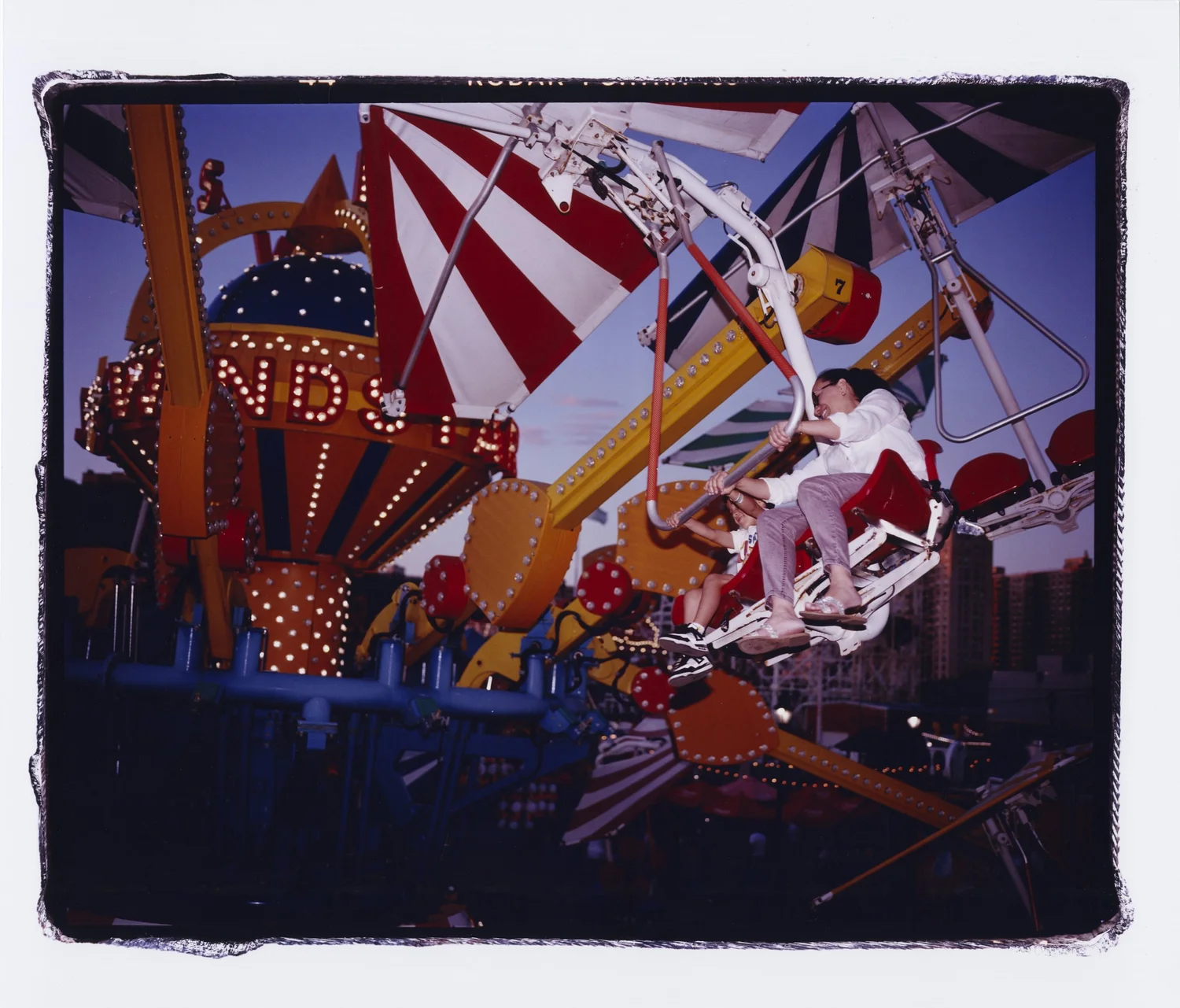
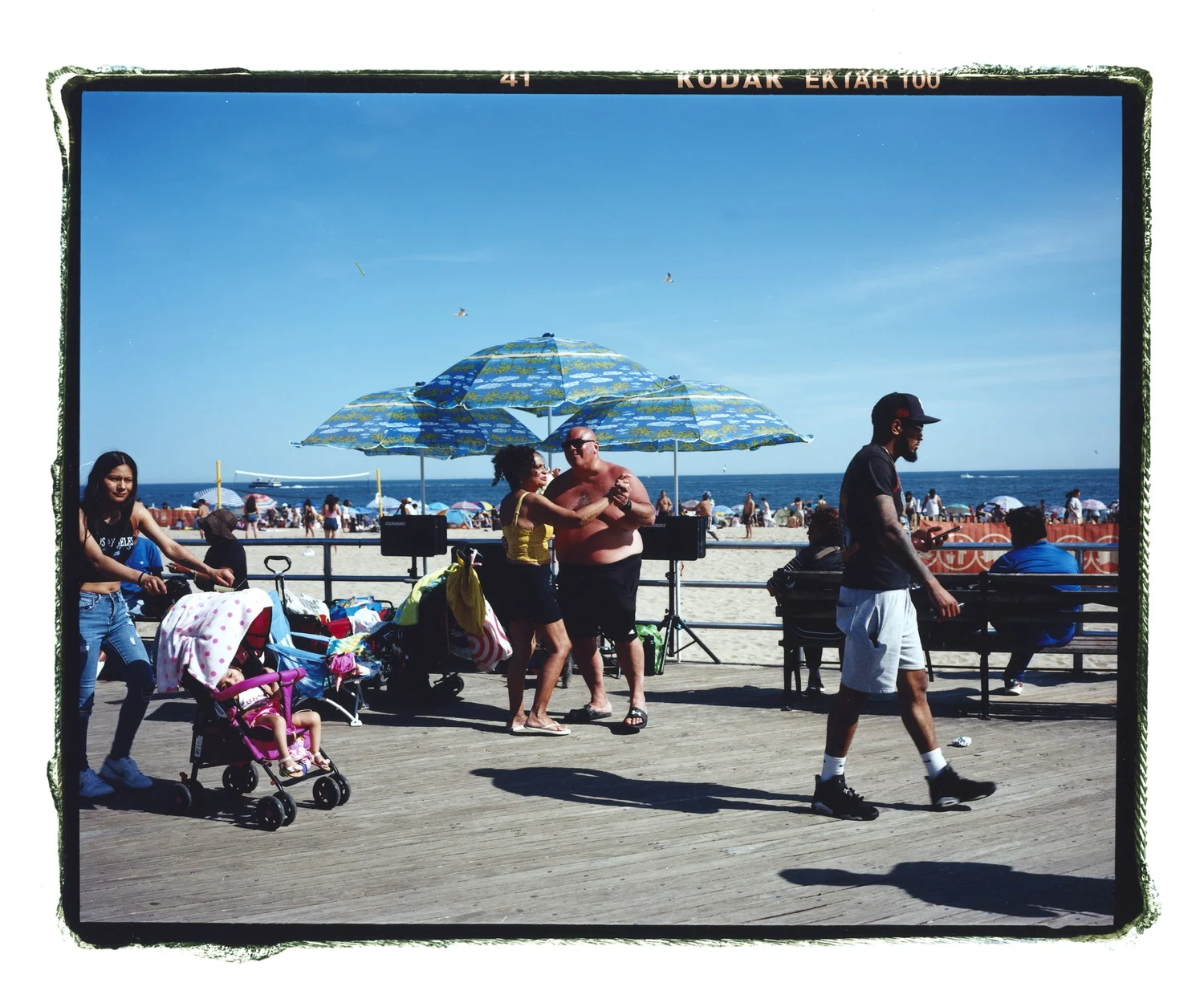
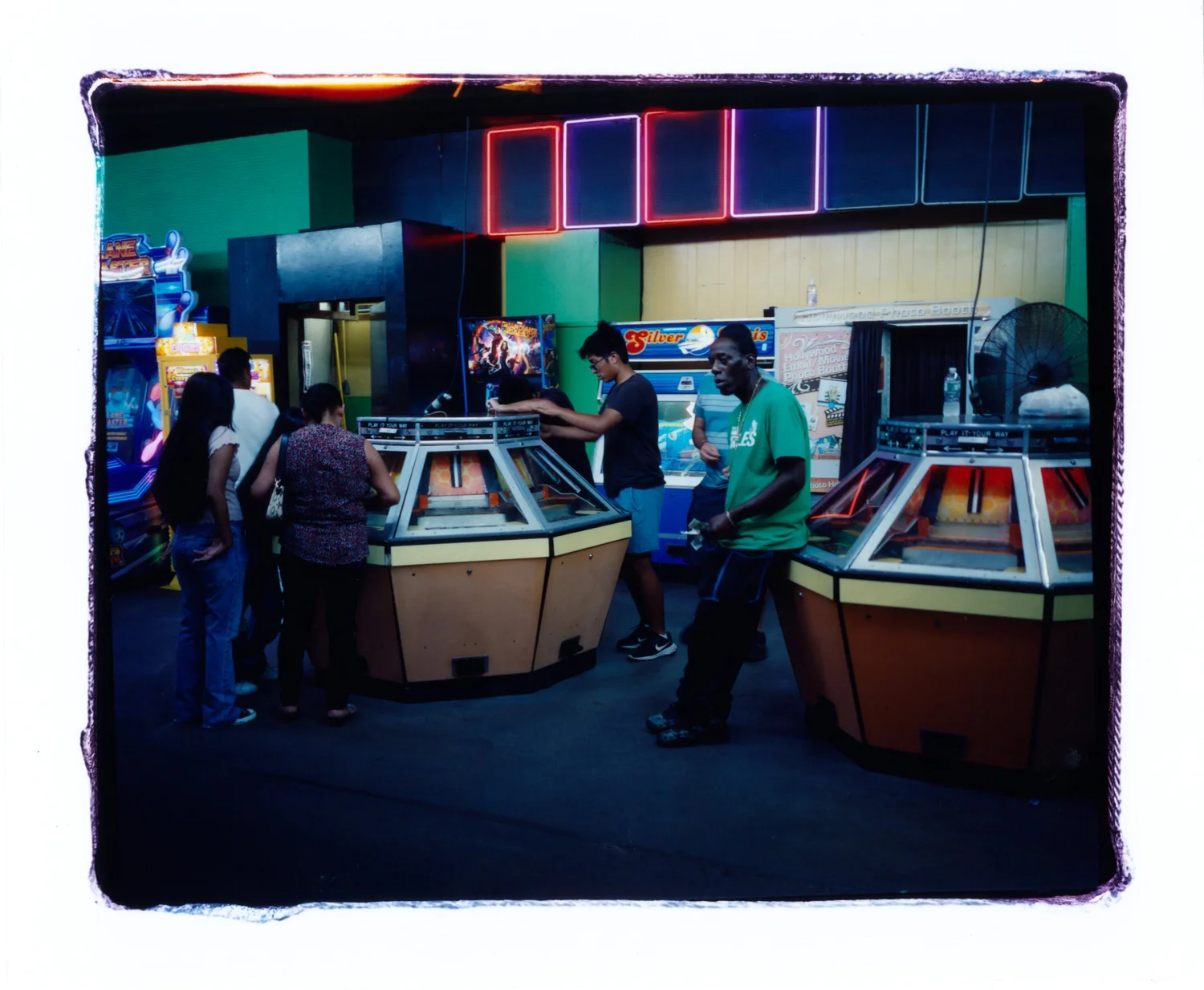
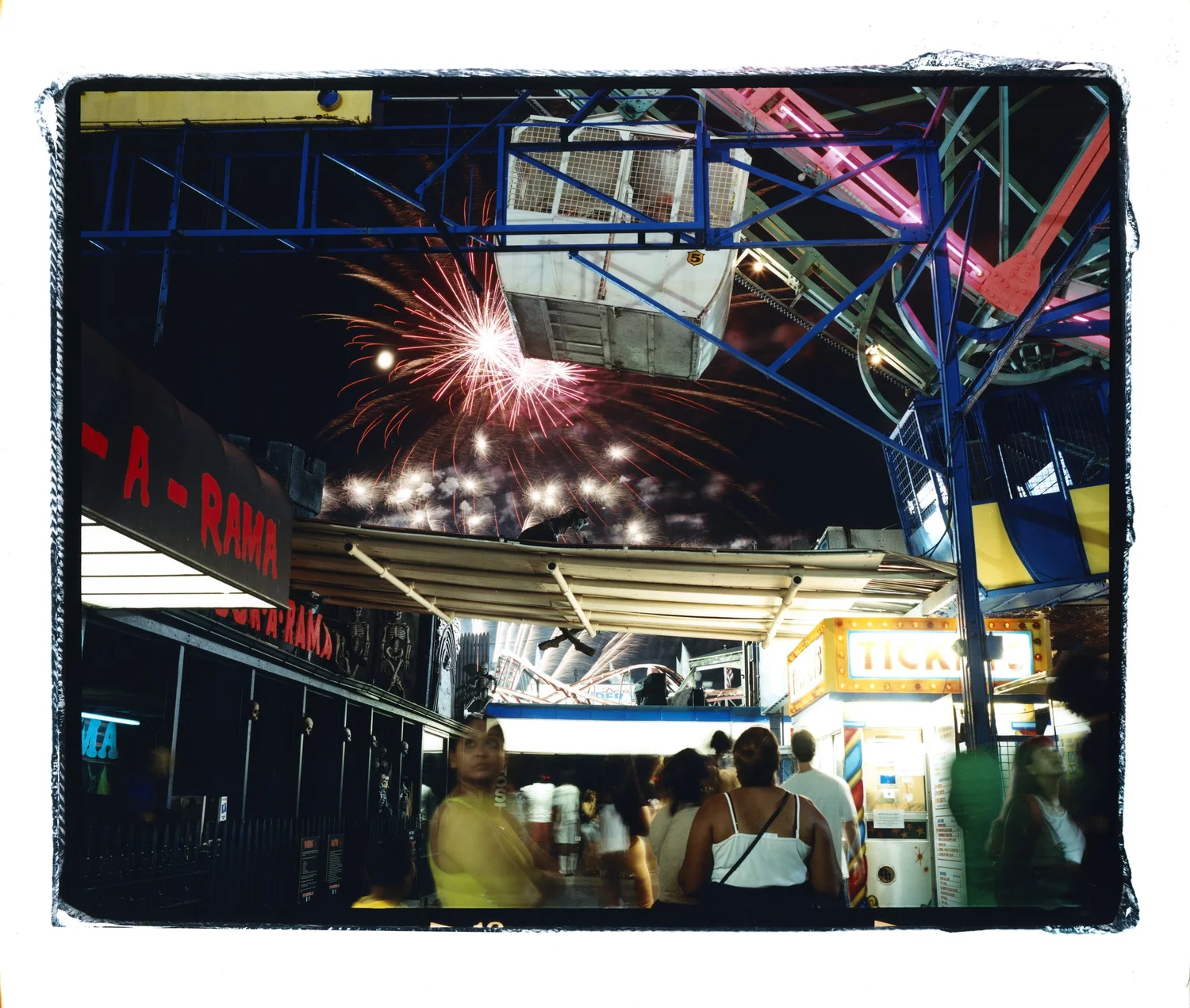
Its boardwalk is a stage for coming-of-age rituals, summer pilgrimages, and the everyday spectacle of public life. Coney Island: In Color (2022–2025) is my photographic and sensory time capsule of Coney, created through hand-made color darkroom prints and typewritten prose.
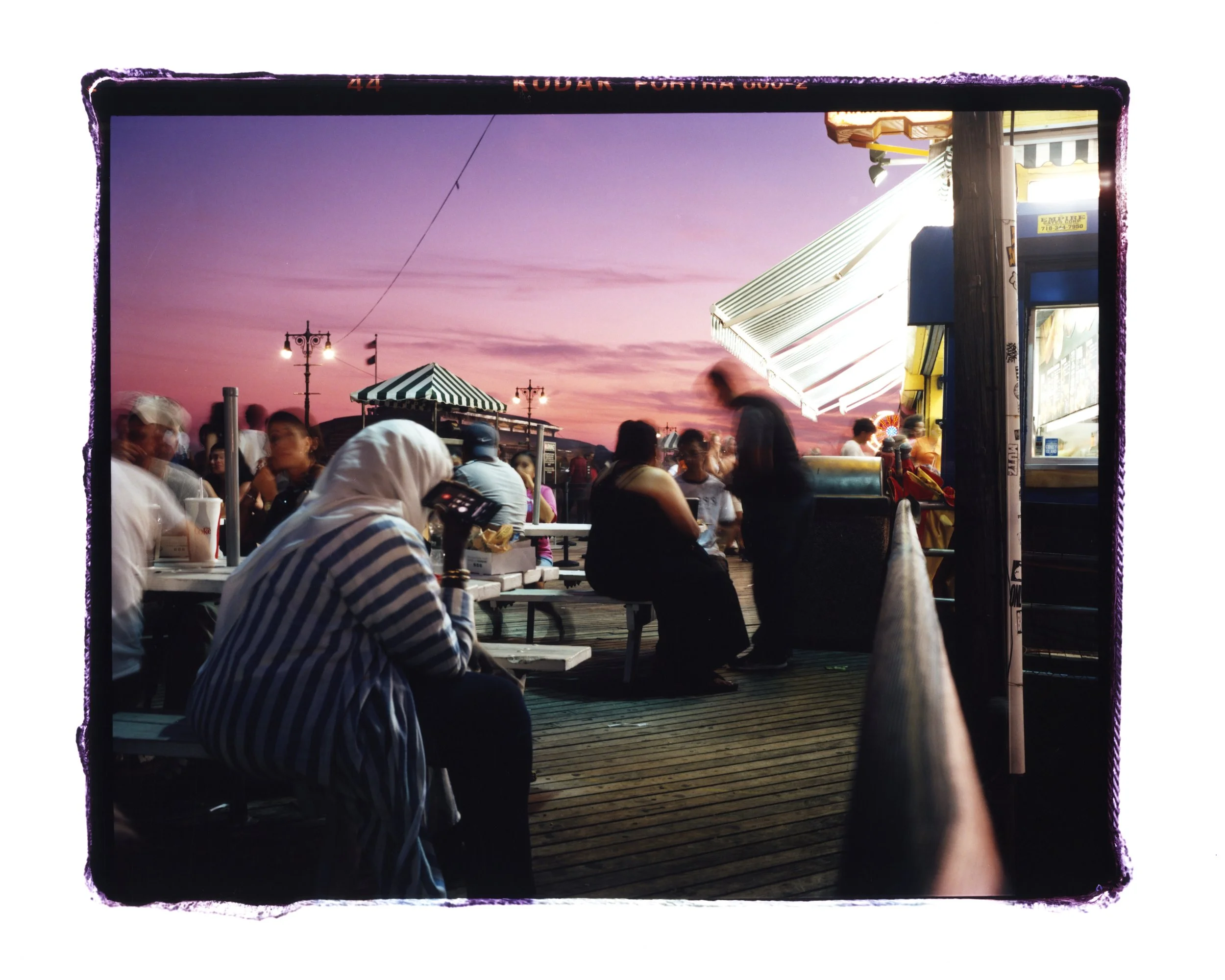
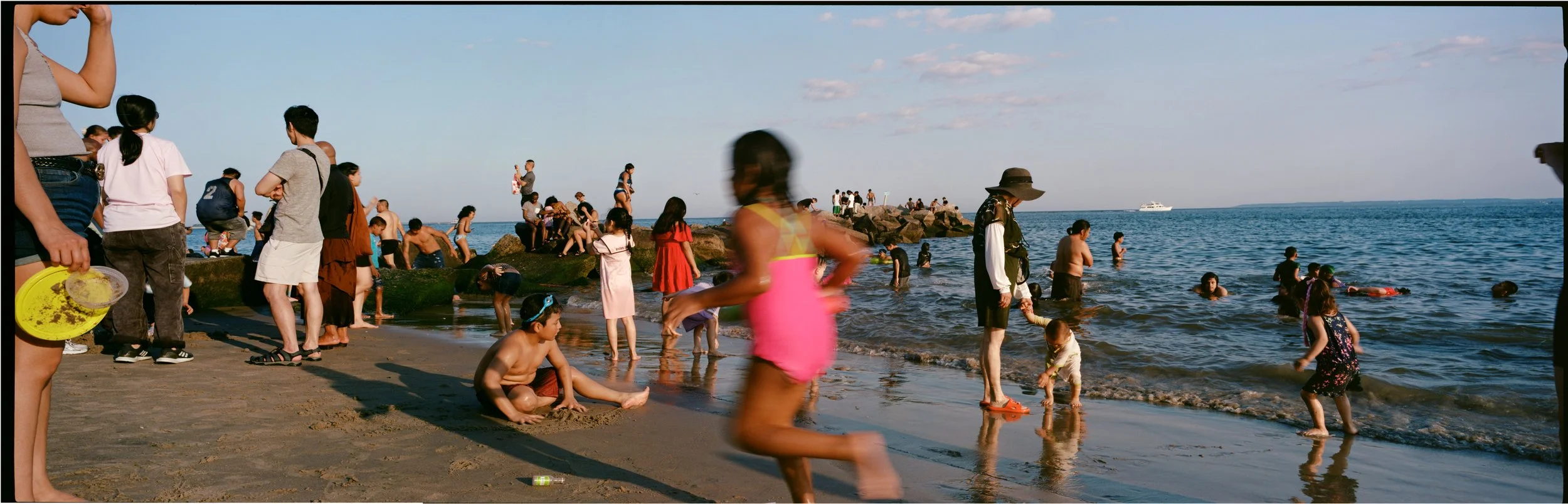
Working across 35mm, 6×7, and the rare 6×17 format, I've built a visual language shaped by analog practice — deliberate and tactile. Over three years, I made weekly visits to Coney, building a record of its landscape and atmosphere.
While Coney has been photographed for generations, few long-term projects have explored it in color — a surprising reality given its vibrancy and iconic visual language. With this work, I aim to expand that canon by bringing a queer and trans contemporary perspective to a history long dominated by male photographers.
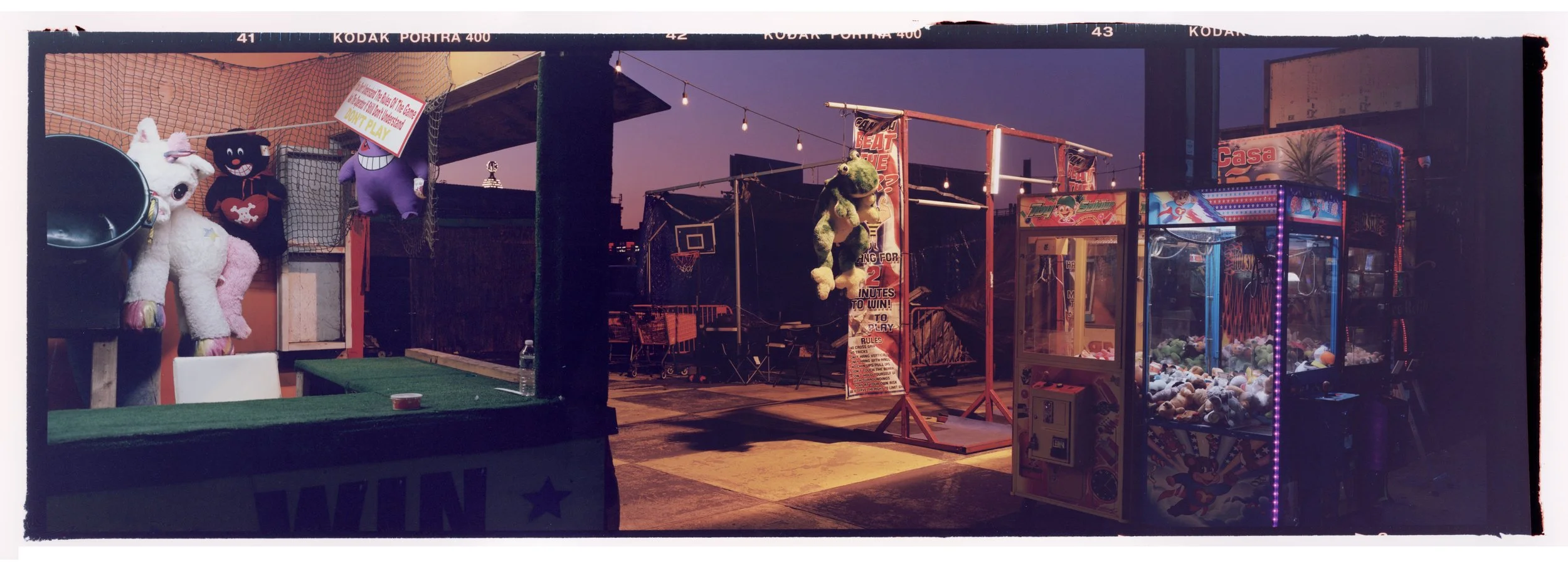
12×36in darkroom print made from 6×17 negative
6×17 medium format


← Scroll to view more →
Through image and prose, the work invites you to experience not only what Coney looks like — but how it feels.


“When you bathe in Coney, you bathe in the American Jordan. It is holy water.
Democracy meets here and has its first interview, skin to skin.
Here, you find the real interpretation of the Declaration of Independence.
The most good for the greatest number. Tolerance… freedom.”
Giuseppe Cautela, 1925
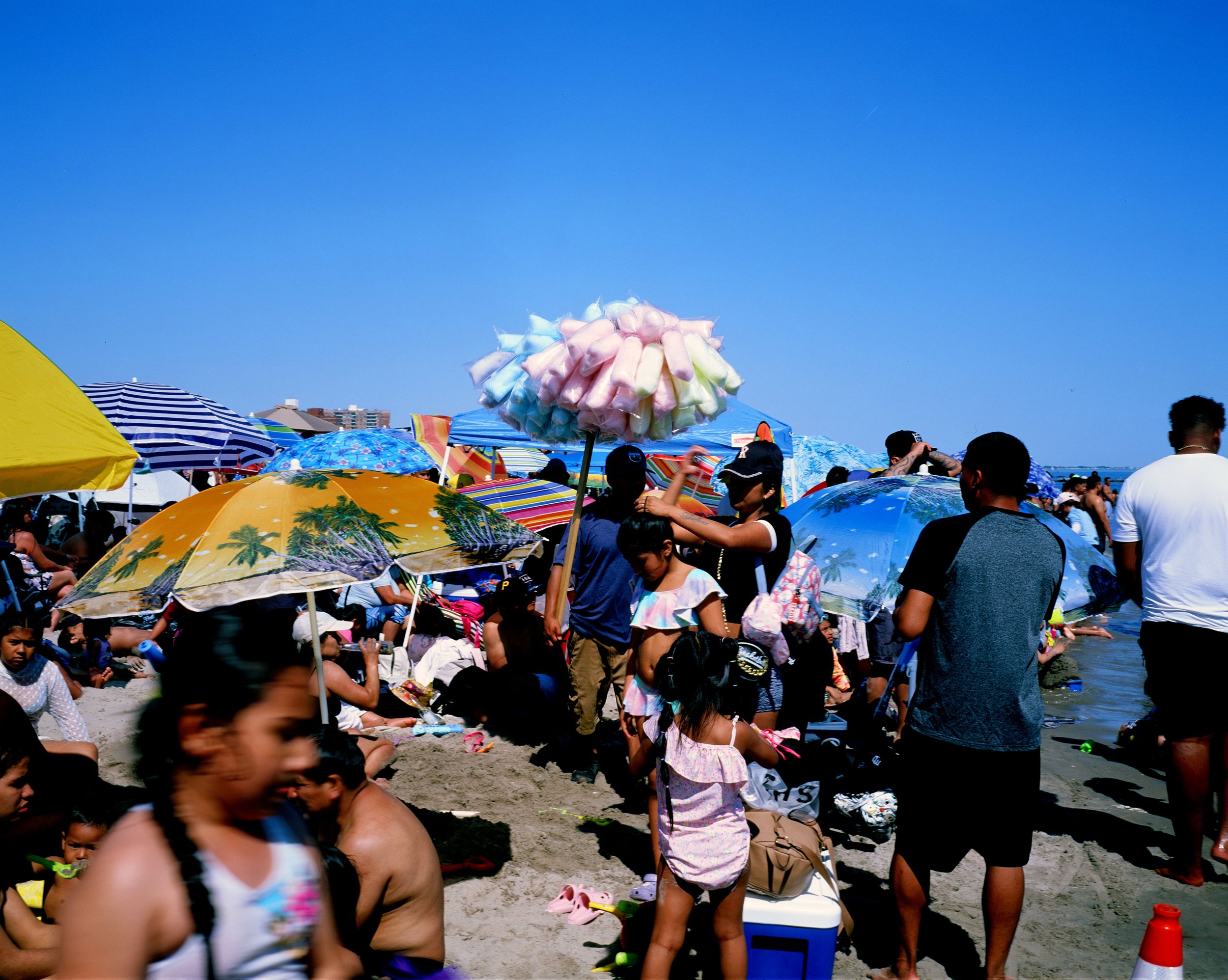
Chapter I
Sodom By The Sea
1609 – 1890s
Victorian manners were coming undone.
For many years, the famed beach and boardwalk was a strip of sand dunes, grass and wild rabbits. The Dutch named it Conyne Eylandt, or Rabbit Island, though its history is contested, and for 200 years it stayed barren. With the railroads reaching Coney Island in the 1860s it also brought the people, and suddenly the beach was bustling and naturally divided by class, with hotels lining the sealine on the East.
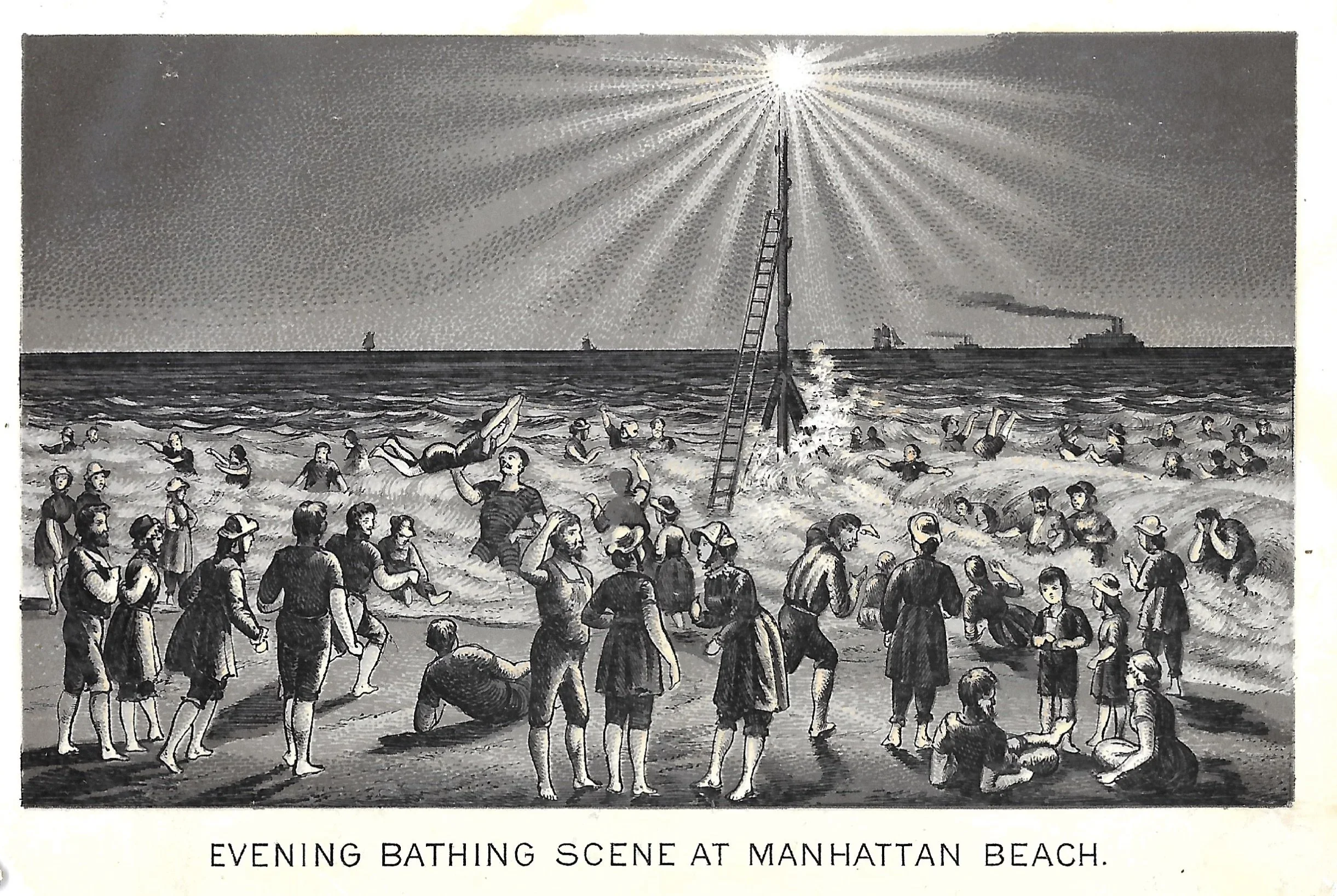
The rich went to Manhattan beach, the comfortable to Brighton, and everyone else to West Brighton, where a blossom of pleasure, sin and laughter filled the seas. Only a streetcar ride away from the city, Victorian manners were coming undone. Men and women bathed together, skin touched, and laughter spilled down the beach.
250,000 of the then 3 million New Yorkers could be found there on a Summer Sunday, and the beach was declared by the New York Times as “Sodom by The Sea”.
Next — II. A Price On Pleasure
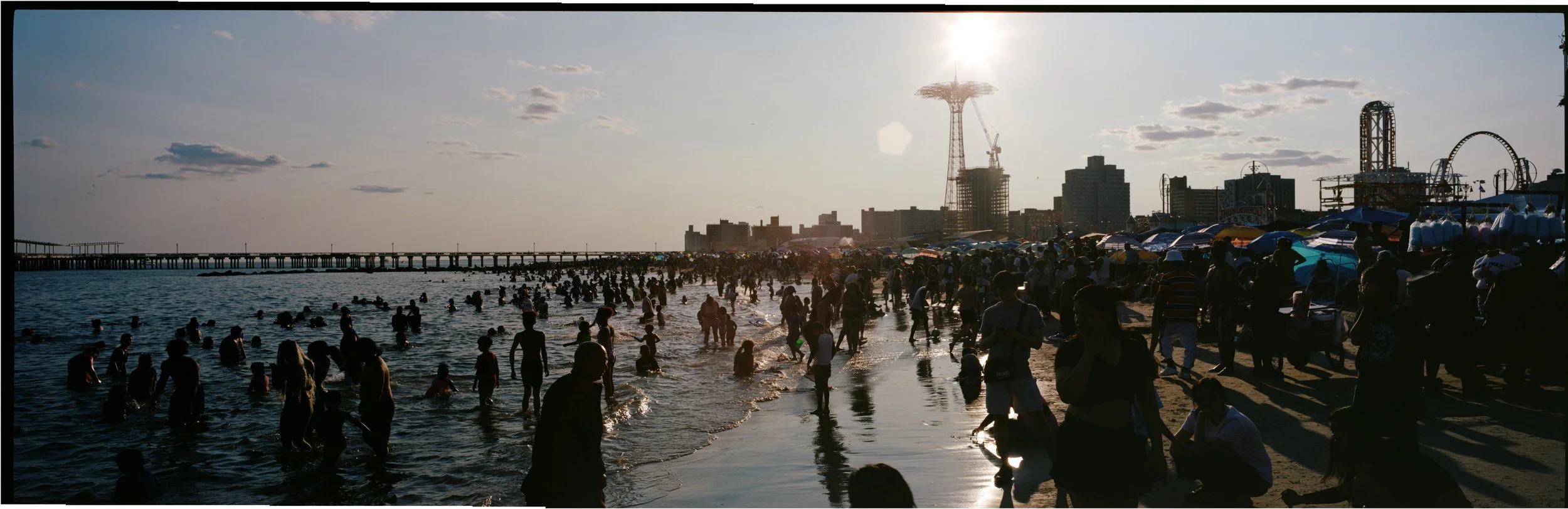




← Scroll to view more →
Chapter II
A Price On Pleasure
1895 – 1911
The country had never seen anything like it.
Many don't know that Coney Island was one of the first places Americans could see electricity at a grand scale. With the turn of the century came more change, and replacing the sin on the sand were the entrepreneurs determined to put a price on pleasure. In 1895 came the first amusement park, and within the decade there were 3 more—Luna Park, Dreamland and Steeplechase.
Tilyou’s park, Steeplechase, was known for its ride of the same name, where, after couples rode on wooden horses (which was also shocking at the time), riders stepped off to a live audience where they became the spectacle. A small stream of air lifted women’s skirts, a clown shocked the men with electricity, and the crowds enjoyed it so much that they often had to turn all the lights off to clear the room for the next show.

Down the street, Dreamland park shone 1 million lightbulbs, with recreations of various wonders and countries from around the world. You could time travel to watch the world being created, or you could be circled in a whirlpool to simulate being sucked down into Hell. The country had never seen anything like it, and soon hundreds of thousands of people were participating in the first true experiment of American amusement and leisure.
Next — III. The Beacon Of The West
“If Paris is France, Coney Island
between June and September, is the world.”
George C. Tilyou
Chapter III
The Beacon Of The West
1907 – 1944
Coney was always rebuilding.
The Coney Island we see today is the result of destruction and rebuilding, over and over again. Coney Island has burned down over 6 times, the people's playground completely leveled and destroyed. Steeplechase burned in 1907, and two days later Tilyou put up a sign promising a bigger and better park, and charged ten cents to walk through the ruins. After that was Dreamland burning down in 1911, and Luna in 1944.
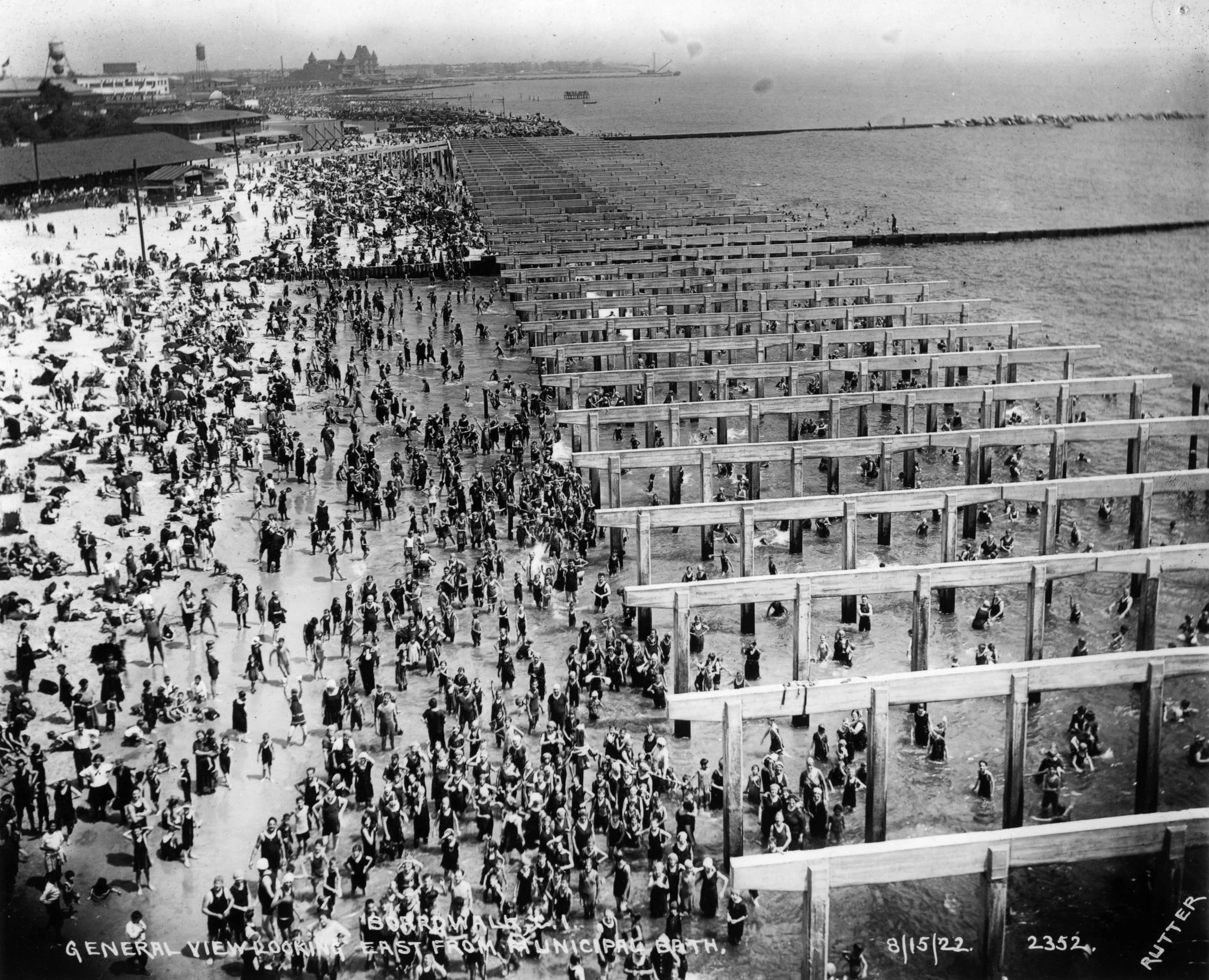
But Coney was always rebuilding, always in this perpetual competition with itself (or rather, among the tycoons who owned each competing park) to be the best, the brightest, the strangest, the biggest, the most grand. It was determined to be the beacon of the west. Before Freud could see his theory of the pleasure principle in action, Coney Island had already put it into practice.
Next — IV. The Coney of Yesterday

“When land and water meet, wonderful things always happen. That means to me that Coney Island will forever be an opportunity.”
Elliot Willensky
35mm


← Scroll to view more →


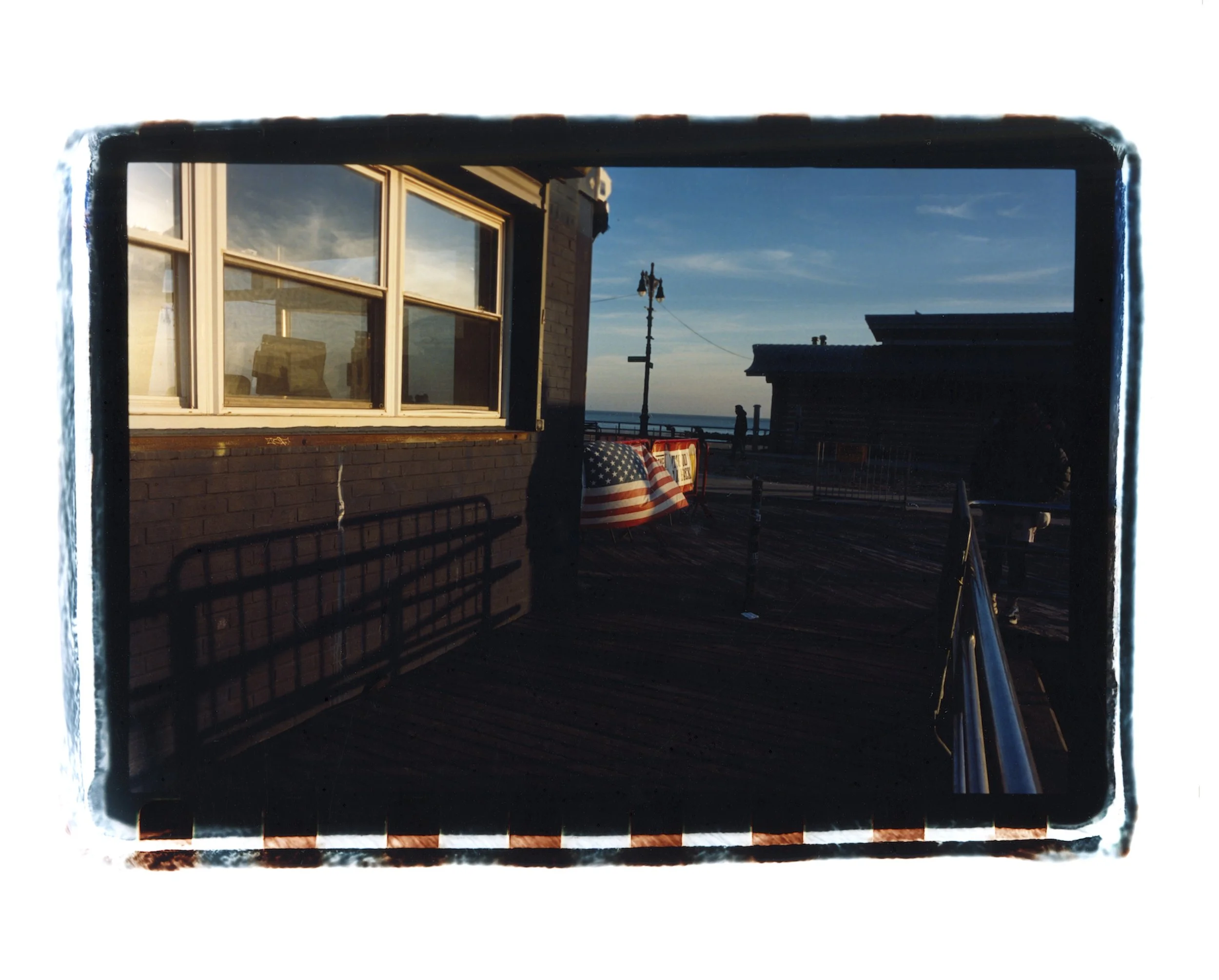
A casino redevelopment proposal
threatened Coney Island.
The community chose to protect it.
In 2024, a casino redevelopment proposal threatened Coney Island. Though ultimately rejected in 2025 thanks to community activism and fierce local opposition, the proposal underscored how fragile this historic landscape remains.
This love letter is a documentation of not only what was nearly lost, but more importantly, of what the community chose to protect.
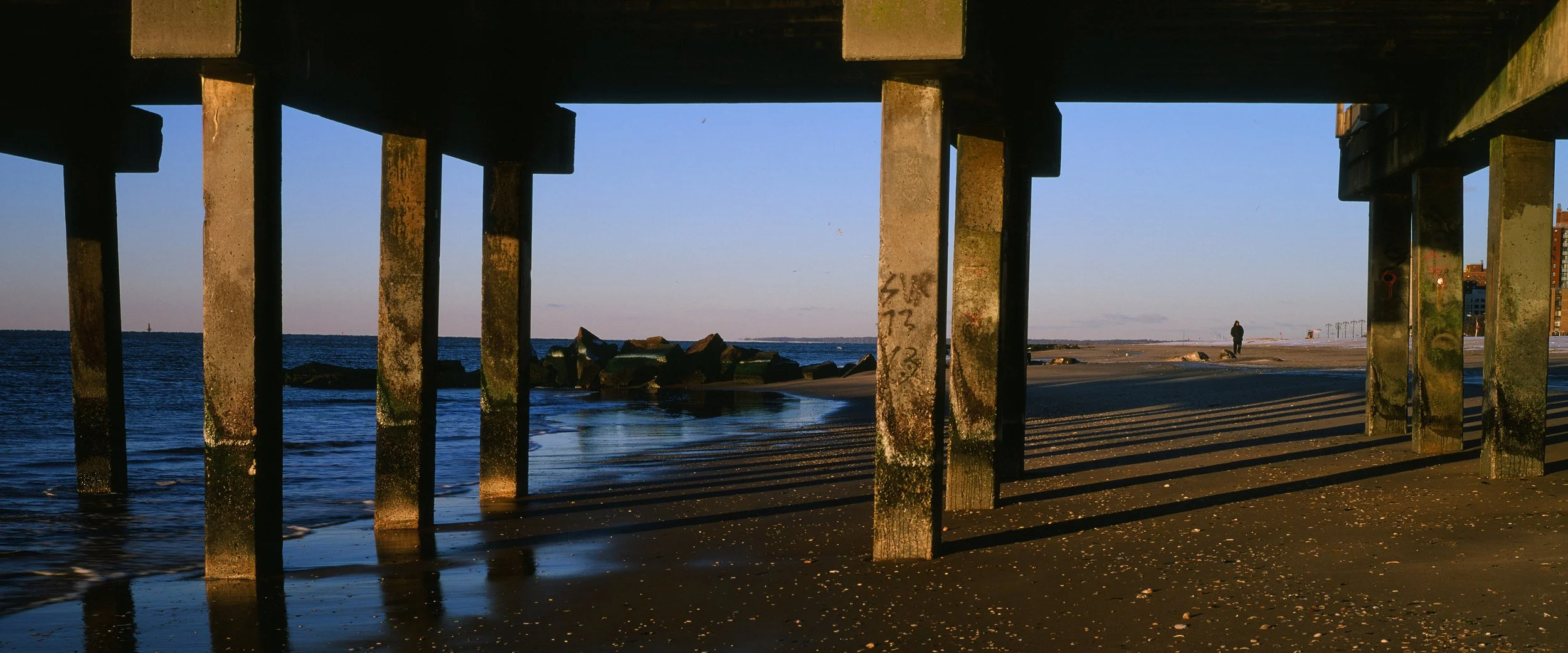
"It was just me and the sea birds on the snow,
waiting for the sun."

Winter, 2024
Crepúsculo
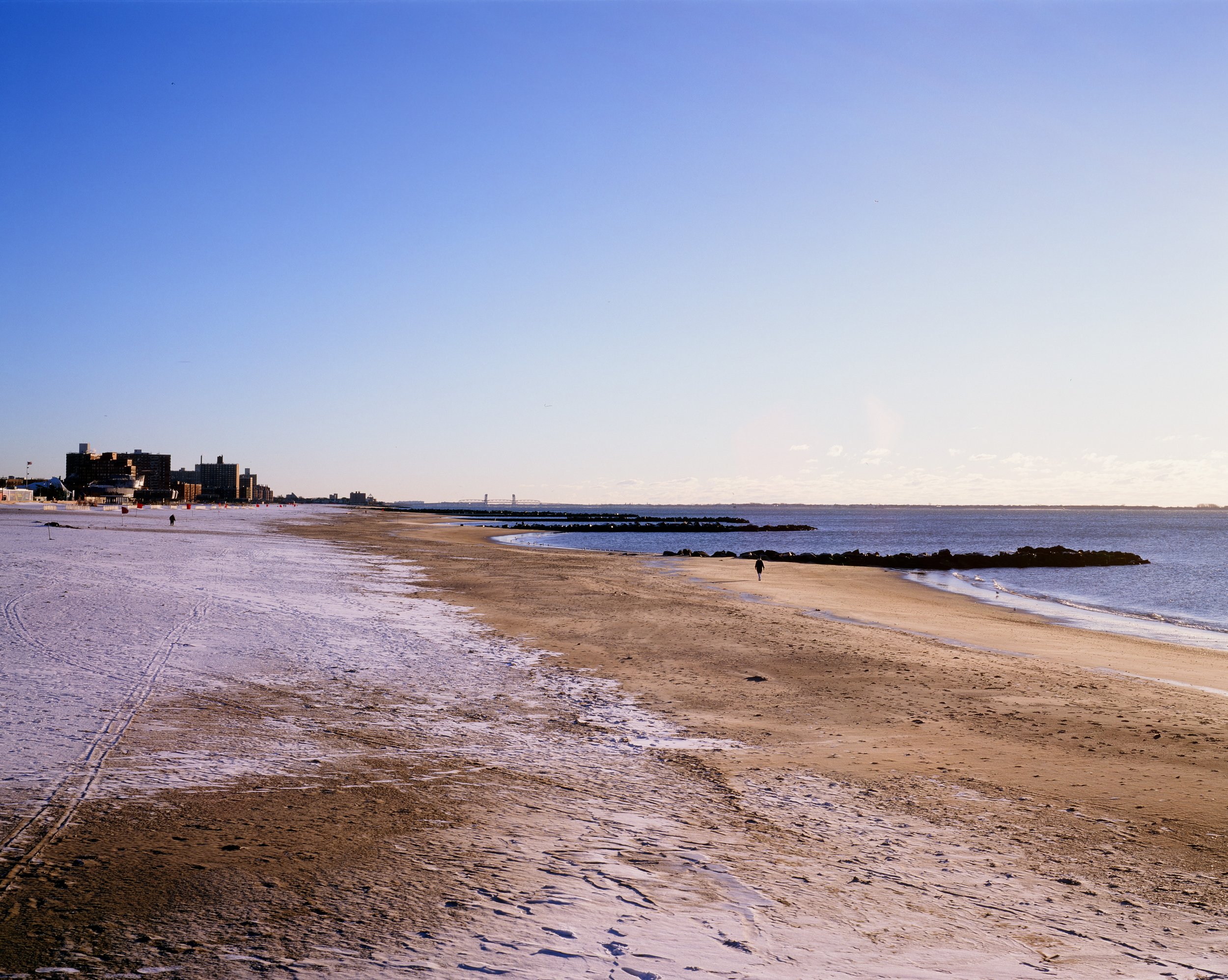
My dad called me after hearing about my failed attempt to photograph Coney Island in the snow at sunrise. The day before, I had taken the train at 5AM in five degree weather, to witness the rare sight (for a Floridian) of snow falling along the sea shore. I was already feeling sick, and by the time I stepped onto the empty boardwalk, the wind coming from the Atlantic was so brutal I couldn't feel my legs after only a few minutes. The beach was completely empty, silent in the dead of winter. Everything was covered in this soft blue light, and it was just me and the sea birds on the snow waiting for the sun. I was standing there shivering, excited to photograph it and go back to the subway station, only to press the shutter and realize that my 40 year old camera had frozen. I tried everything I could think of while my fingers went numb, but eventually I gave up and left without a single photograph. I felt completely defeated walking back home through the cold. I was determined to get an image. So the next morning, I asked my friend Bo if she wanted to come with me for attempt number two. With the promise of a homemade PB&J and seeing something beautiful, she agreed.
We stood there together watching the sky slowly change colors over the water. Our shadows elongated over the snow and sand, and the pinks and purples of the sky turned into oranges and then blues. The waves looked frozen in the distance, and back on the boardwalk, the rides sat still behind us, covered in snow. My dad called me later that day and I told him the second attempt had worked. He said, "I'm glad sweetheart, I just wanted to make sure you got your crepúsculo." Crepúsculo is my dad and I's favorite word in Spanish. It means twilight, which is the light just preceding or anteceding the sun. Snow on the beach had always been something I wanted to witness, and that morning, Coney Island felt completely transformed. It was quiet, frozen, and the strangest of all, quiet.


← Scroll to view more →
Chapter IV
The Coney of Yesterday
1920 – Today
Forty years from now, someone will long for this Coney Island too.
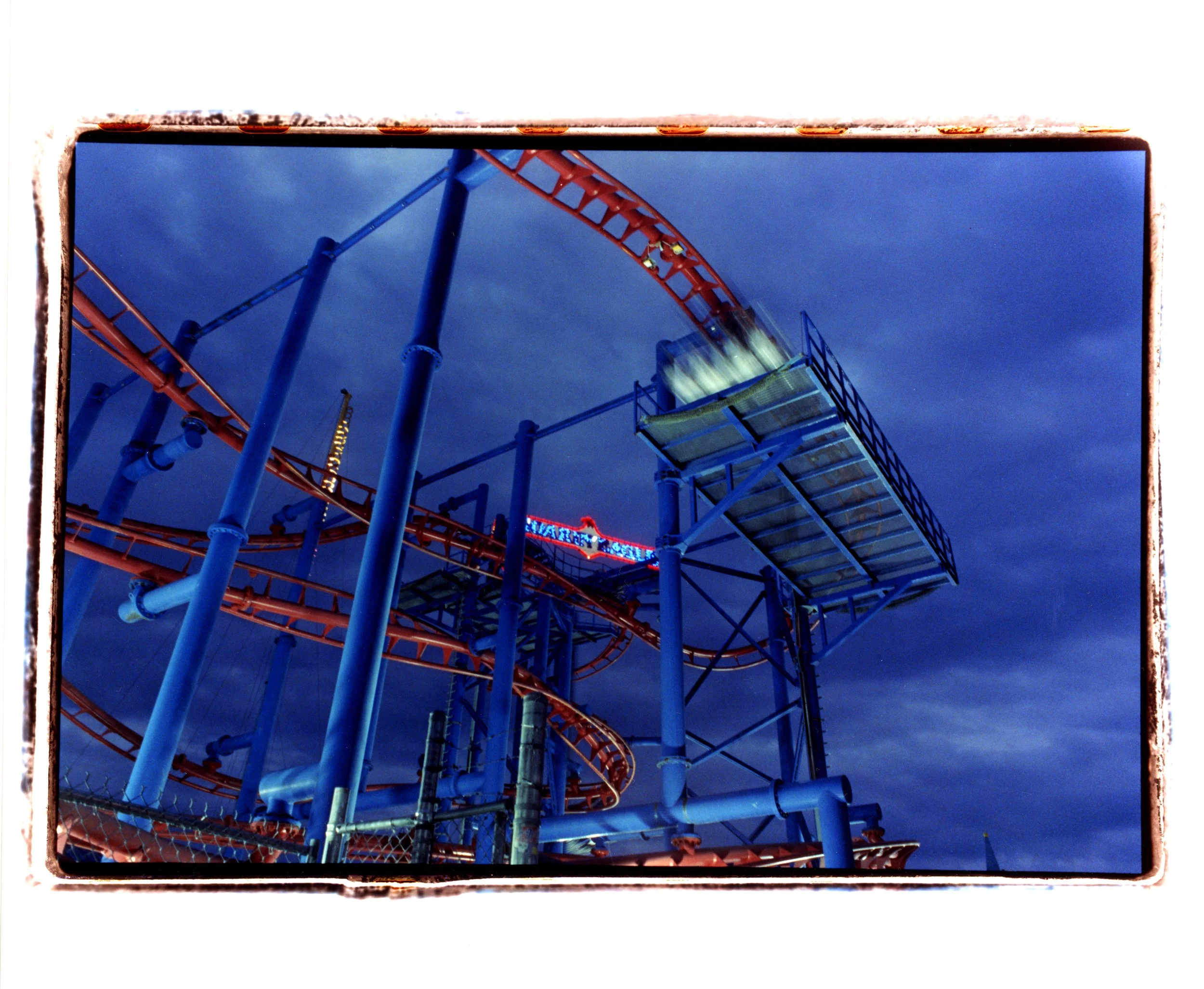
Perhaps it's for that reason that to this day, Coney is constantly stuck in a cycle of nostalgia. There are a few structures that are "original" though it's hard to say what “original” means. There is the Wonder Wheel from 1920, the parachute jump from 1939, and the Cyclone, the 100 year old wooden roller coaster. Everything else is memory and history, and you can ask any New Yorker and they’ll tell you about the Coney Island of their childhood, the one that was better and stranger. It’s a sentiment that’s been that way for as long as Coney has been around. Even in 1933, a newspaper ran a letter titled “Who remembers the Coney Island of forty years ago?”
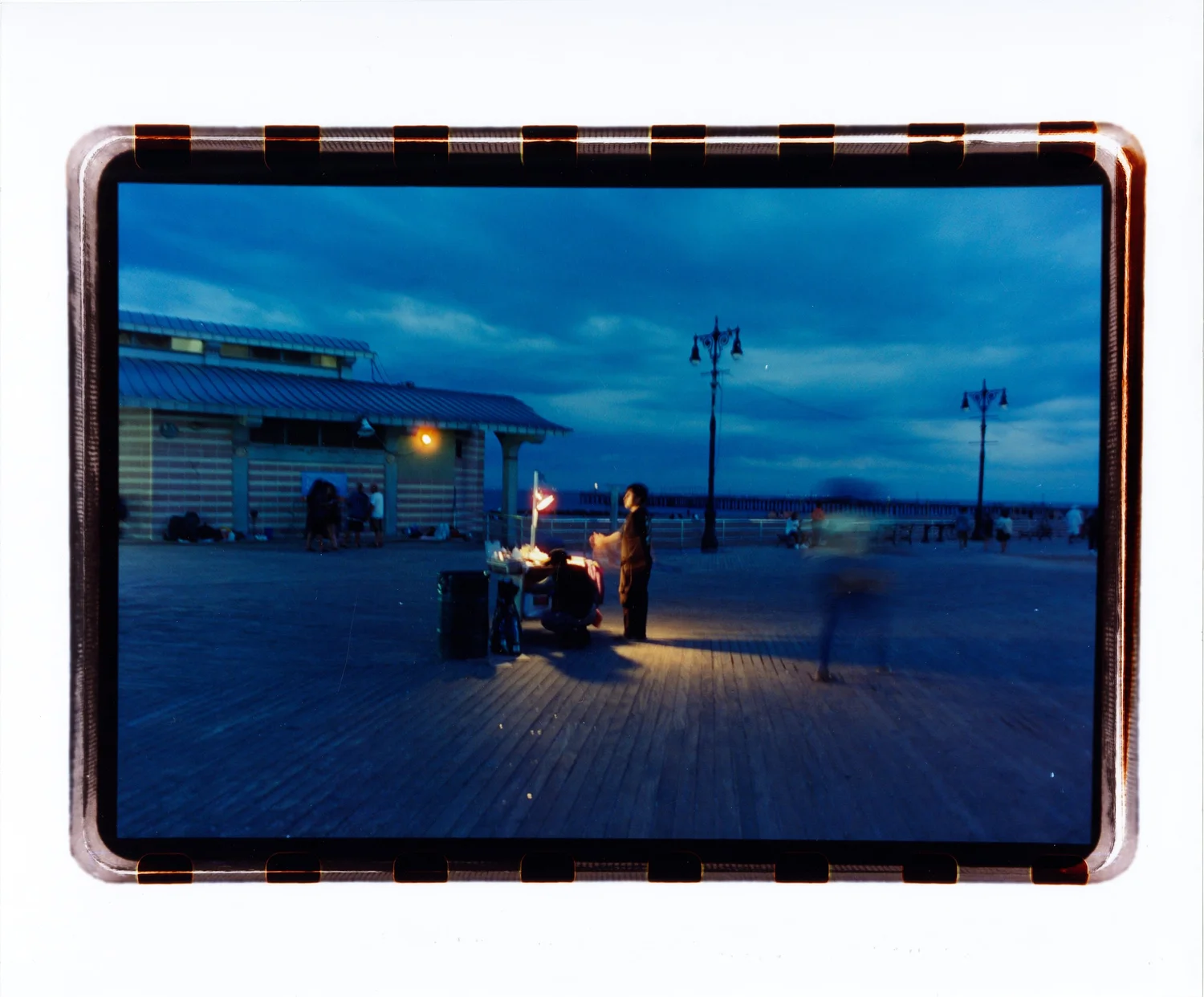
There is a natural impulse to be caught in nostalgia’s grasp—to long for the way things used to be and mourn what never was. Forty years from now, someone will long for this Coney Island too: the alley of games on the Bowery, the packed Fourth of Julys, the snake charmers and the sign painters. Towels drying over the boardwalk railing that look like flags. Parents rinsing sandy feet in the water fountain. Tokens in a palm, a goldfish being won, the silent awe after a firework bursts. The rides, nearly a century old, that we still got to take. In nostalgia, there is always more layered underneath. This book shows Coney as I saw it: post pandemic, when the world was coming back into itself, and when a casino threatened its very existence.
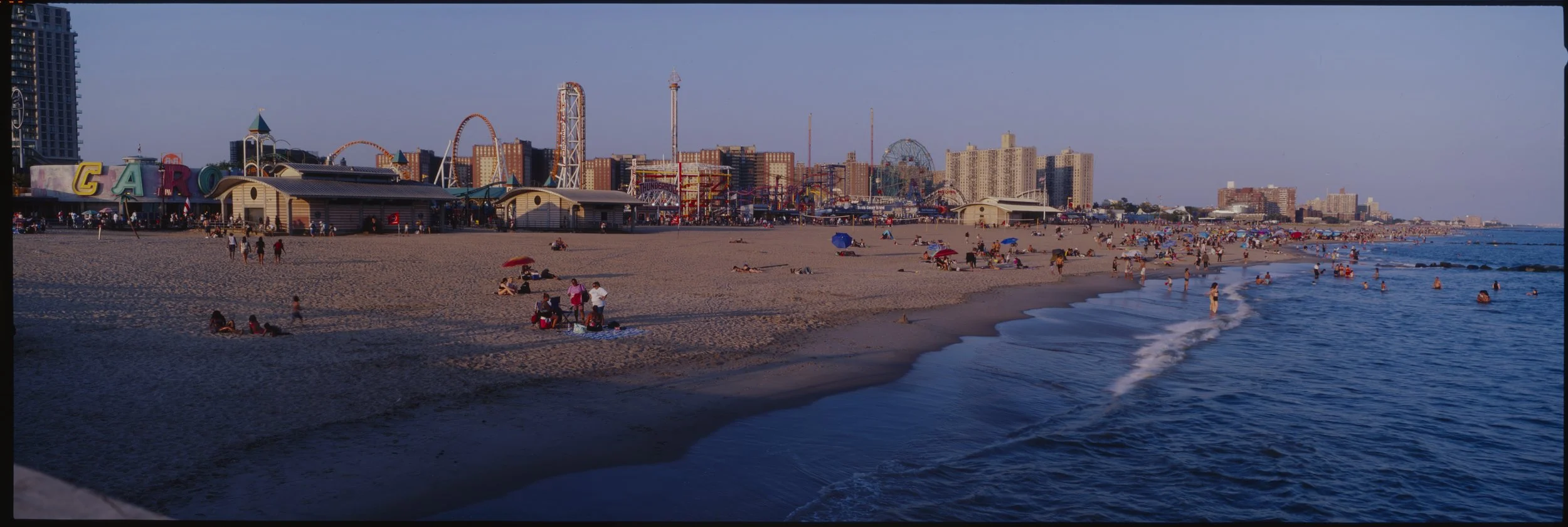
An act of devotion —
to Coney Island
and the people
who fill it with life;
to color, memory, and light.
I hope that my photographs and words can transport you somewhere familiar. Even if you've never been, I hope you can travel to the Coney Island of your mind, and that you stay for the feeling of the sea breeze on your face, and the sound of children laughing amongst a sea of chaos. At the end of each weekly visit I made to Coney, I would stand by the railing of the boardwalk, and look out at the emptying beaches and birds circling the food left on the sand. The ground would be fading from orange if the sky had given a sunset that evening, and I would be tired from being drenched in it, and from listening and seeing and smelling and brushing against the sea of people that day. I'd feel this weary urge to go home, but every time, some unwilling wonder kept me there a little longer. I hope that as you look through this project, you will also listen to that unwilling wonder to stay.
Nat Segebre
Coming Soon
The Book
I'm currently in the process of publishing this project as a book — a tactile, hand-made object that recreates the feeling of being there and honors Coney Island.
updates to come...