Writing

A Very American Kind of Amusement
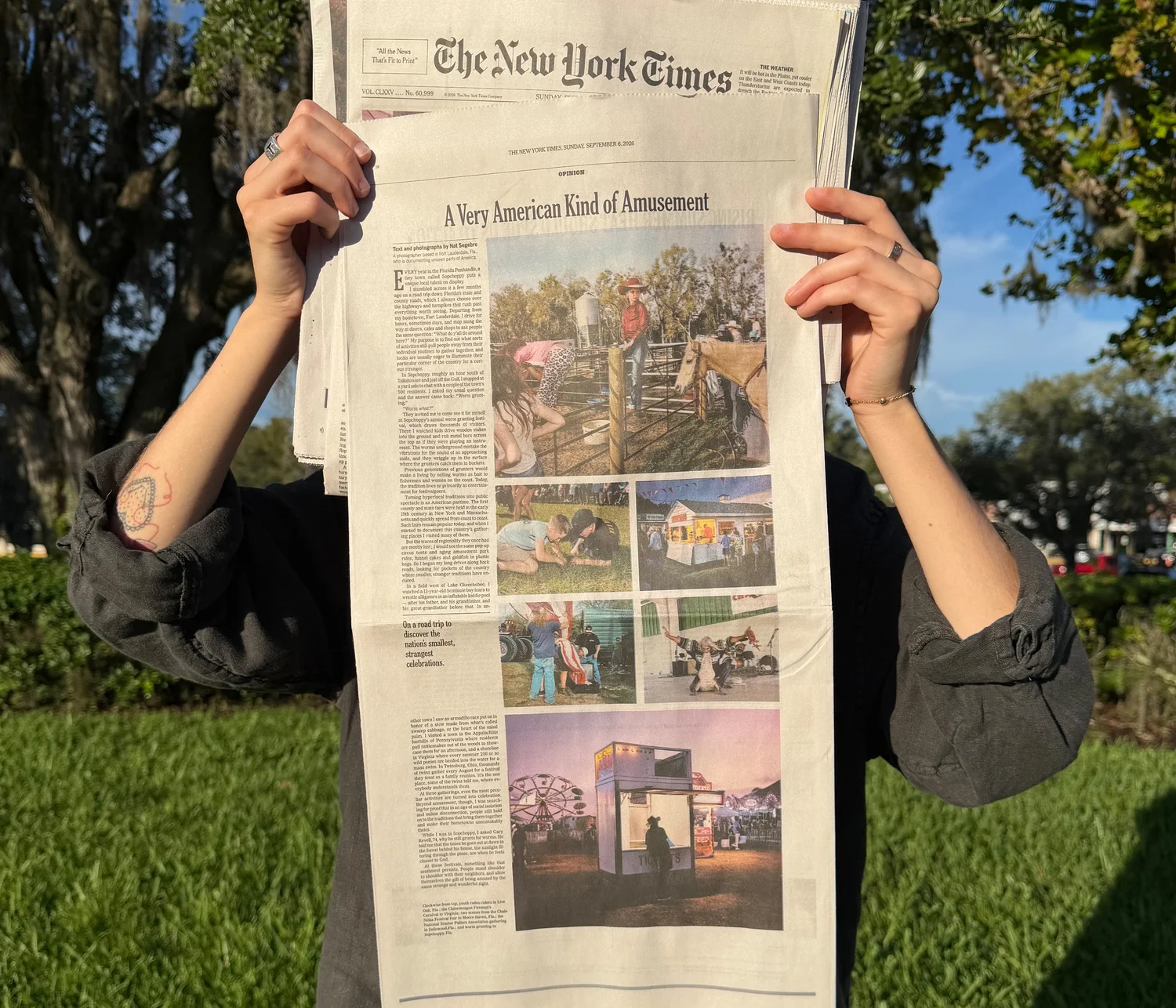
An excerpt
…In a field west of Lake Okeechobee, I watched a 13-year-old Seminole boy learn to wrestle alligators in an inflatable kiddie pool — after his father, and his grandfather, and his great-grandfather before that. In another town I saw an armadillo race put on in honor of a stew made from what’s called swamp cabbage, or the heart of the sabal palm. I visited a town in the Appalachian foothills of Pennsylvania where residents pull rattlesnakes out of the woods to showcase them for an afternoon, and a shoreline in Virginia where every summer 200 or so wild ponies are herded into the water for a mass swim. In Twinsburg, Ohio, thousands of twins gather every August for a festival they treat as a family reunion. It’s the one place, some of the twins told me, where everybody understands them.
At these gatherings, even the most peculiar activities are turned into celebration. Beyond amusement, though, I was searching for proof that in an age of social isolation and online disconnection, people still hold on to the traditions that bring them together and make their hometowns unmistakably theirs.
While I was in Sopchoppy, I asked Gary Revell, 74, why he still grunts for worms. He told me that the times he goes out at dawn in the forest behind his house, the sunlight filtering through the pines, are when he feels closest to God.
At these festivals, something like that sentiment persists. People stand shoulder to shoulder with their neighbors, and allow themselves the gift of being amazed by the same strange and wonderful sight.
The full essay is available at The New York Times.
Read the full essay ↗The Sun Is Returning, What Will We Do With All This Light?
Why we must document, remember and share life’s most beautiful gifts
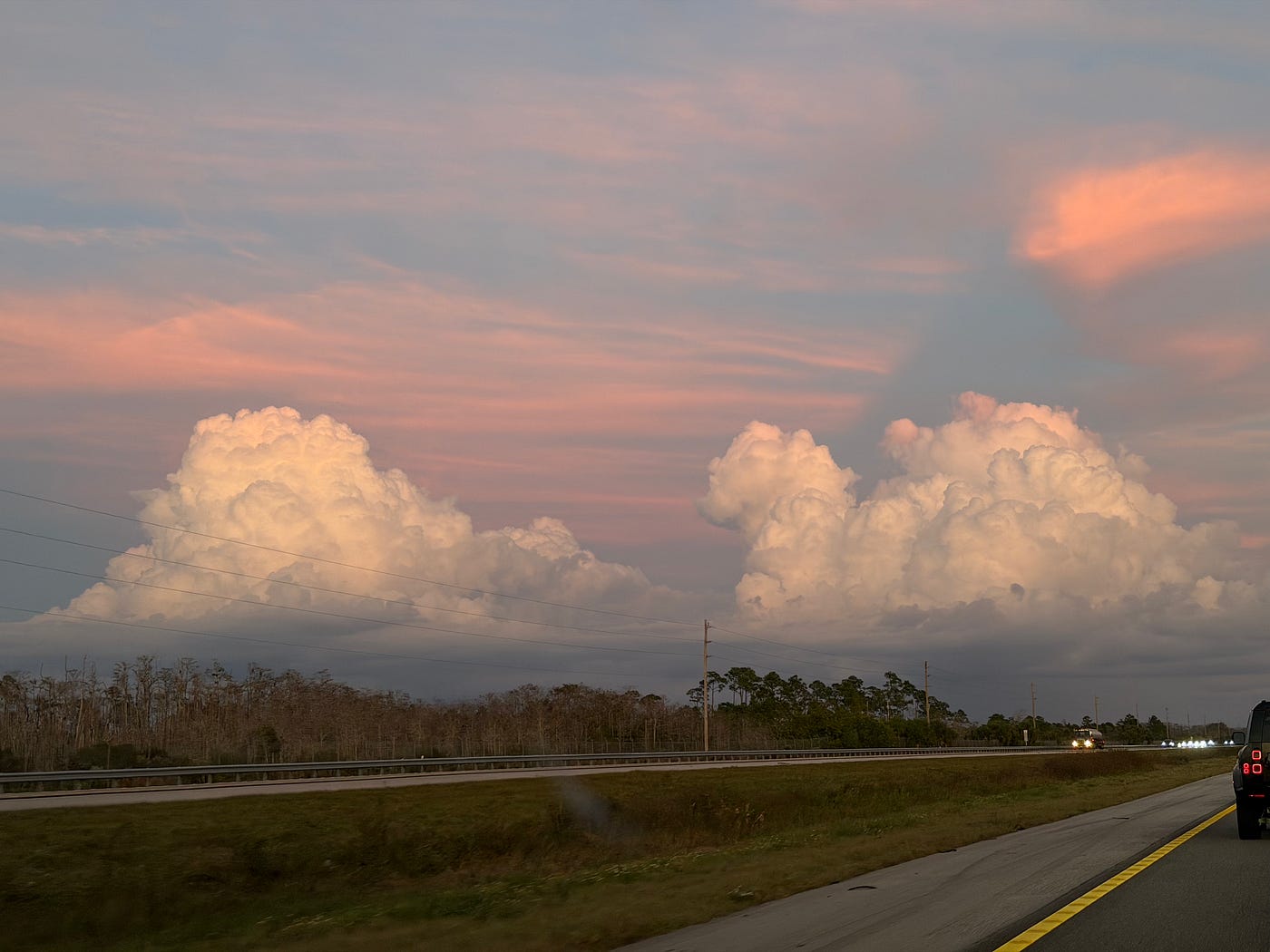
I hope the spring air finds you in gentle graces this April. Have you hugged a friend yet? The clouds are white and fluffy where I am, though the grass doesn’t resemble a Gustav Klimt painting just yet.
Spring has emerged after a long winter, so I am told. I’ve been living amongst the swamp with the lizards and have been lucky to not remember the short days and cold feet.
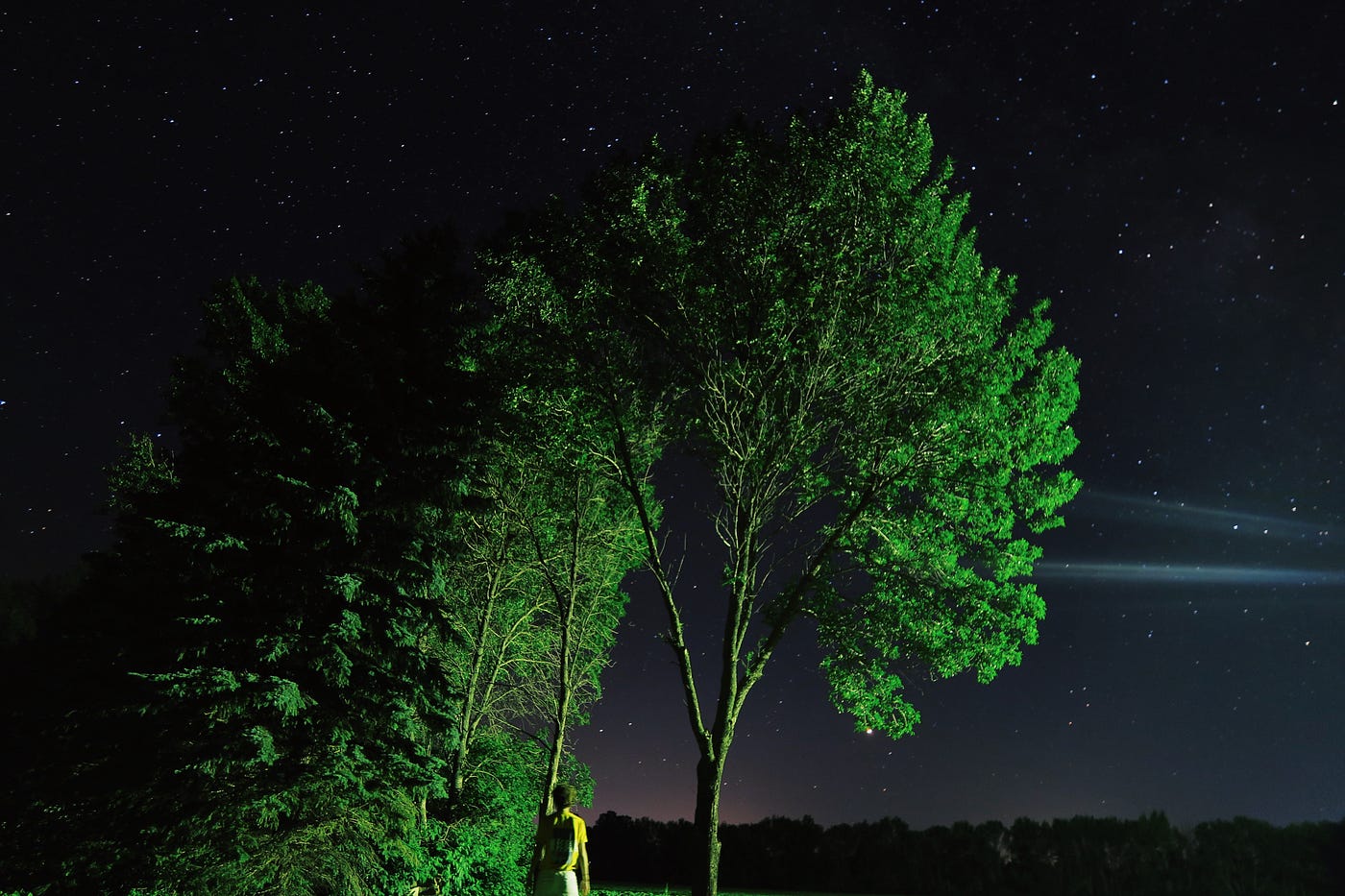
With the sun returning and longer days here to stay, what will we do with all this light? I have filled my weekends with long drives and sunsets, surprising friendships and mossy trees. So far, spring has been good to me. I have found myself with a cup that’s overfilling. I’m almost getting overwhelmed with all of these things to do and people to meet and experiences to remember. How will I manage to do it all and document it?
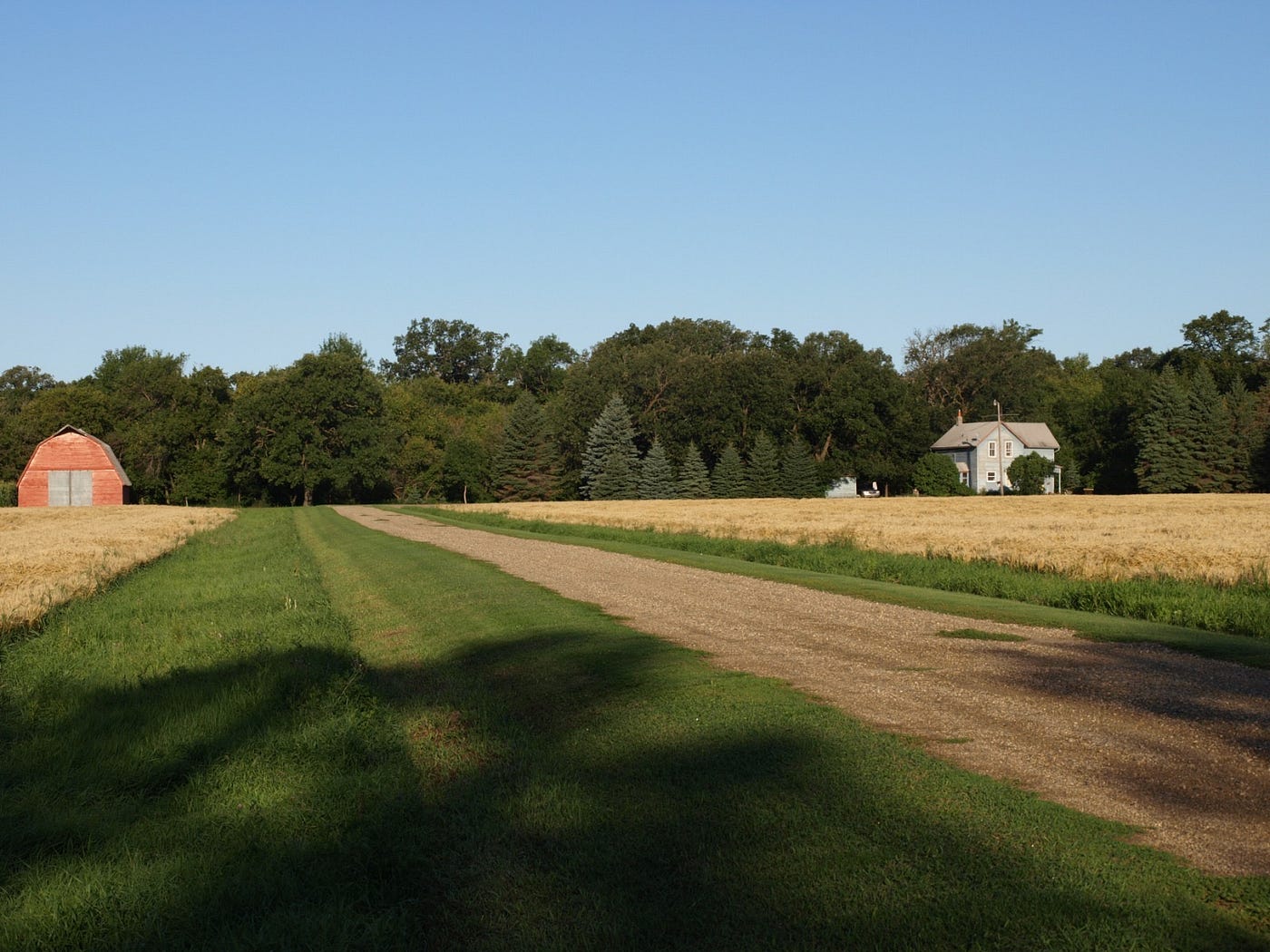
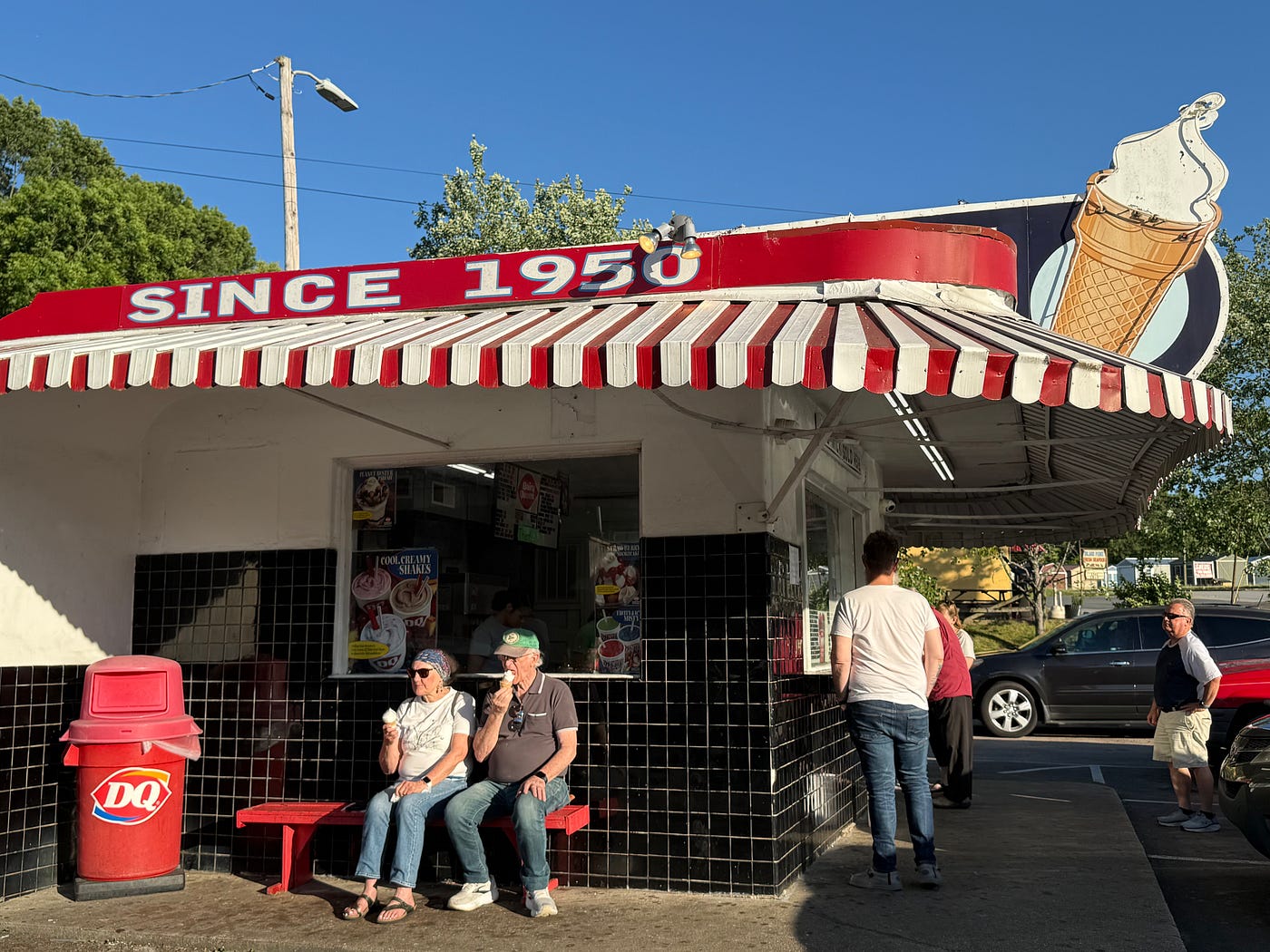
I have been thinking a lot of the coming Summer. I am longing for long days spent in the sun, dips into the water for reprieve, ice cream cones and long talks in fields. As a kid, it was my favorite time of the year. I would visit my great grandma’s farm up in North Dakota, and I would spend my days quietly amongst the corn fields and under the stars, finding deer antlers and running around with the farm collie until I was called in for supper. I have fond memories of Fourth of July—sitting in fields or on top of parking garages, watching those bright flashes of light followed by smoke. I think of wearing white t-shirts with stars and eating hot dogs after paddling in the lake.
What To Do With All This Light
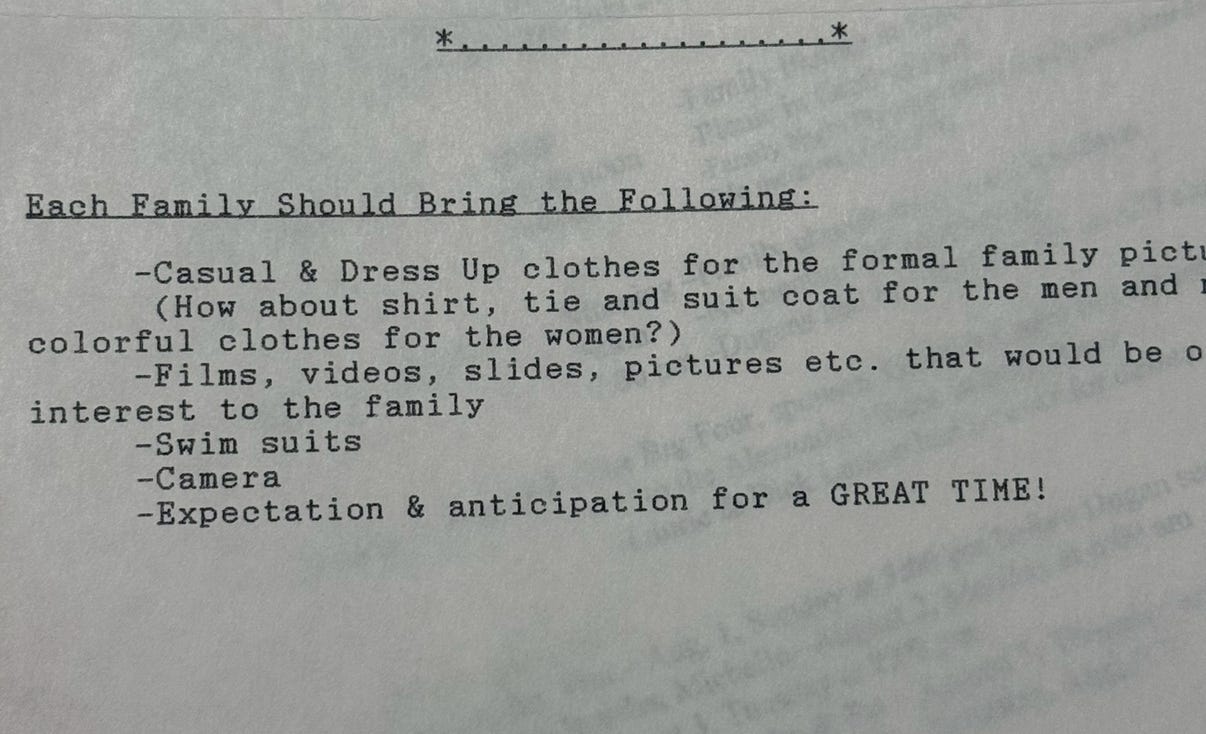
I have always been someone who has felt a need to document things. I am still figuring out what it comes from—whether it’s a fear of forgetting or of a love for history and tradition. Perhaps both. My grandma has journals that record every day of her life, kept neatly in boxes amongst photo albums and other collections. She has been working on something called “My Story” — photo books she has been making that chronicle her entire life, so that her kids and grandkids may enjoy them. She has recently made it up to the mid 2000s, to date she’s on the years 2013-2017. Beyond her own life she has records of so much family history. Photos of relatives from the 1800s. Type written itineraries from family reunions.
My great grandma, who everyone called “Dilly”, was similar — her house on the farm was filled to the brim with mismatched cups and plates and knick knacks that all had a purpose. She was a collector, much like her daughter and much like me. When I think of what intangible things were passed down to me, the innate need to collect, archive and document is one of them.
With all of this light in the longer days I feel the pull to sit in the sun and close my eyes. There are certain memories I have where I said out loud, something to the effect of, “I am so happy.” Each memory that flashes spans across years, but they are all simple. I am somewhere quiet, closing my eyes in the face of the sun. One is laying on a park bench in Brooklyn with my head on somebody’s lap. Another is laying on a beach with placid water kissing the shore. Another is standing on an olive orchard after a friend’s birthday party, stopping for a moment to close my eyes and look up.
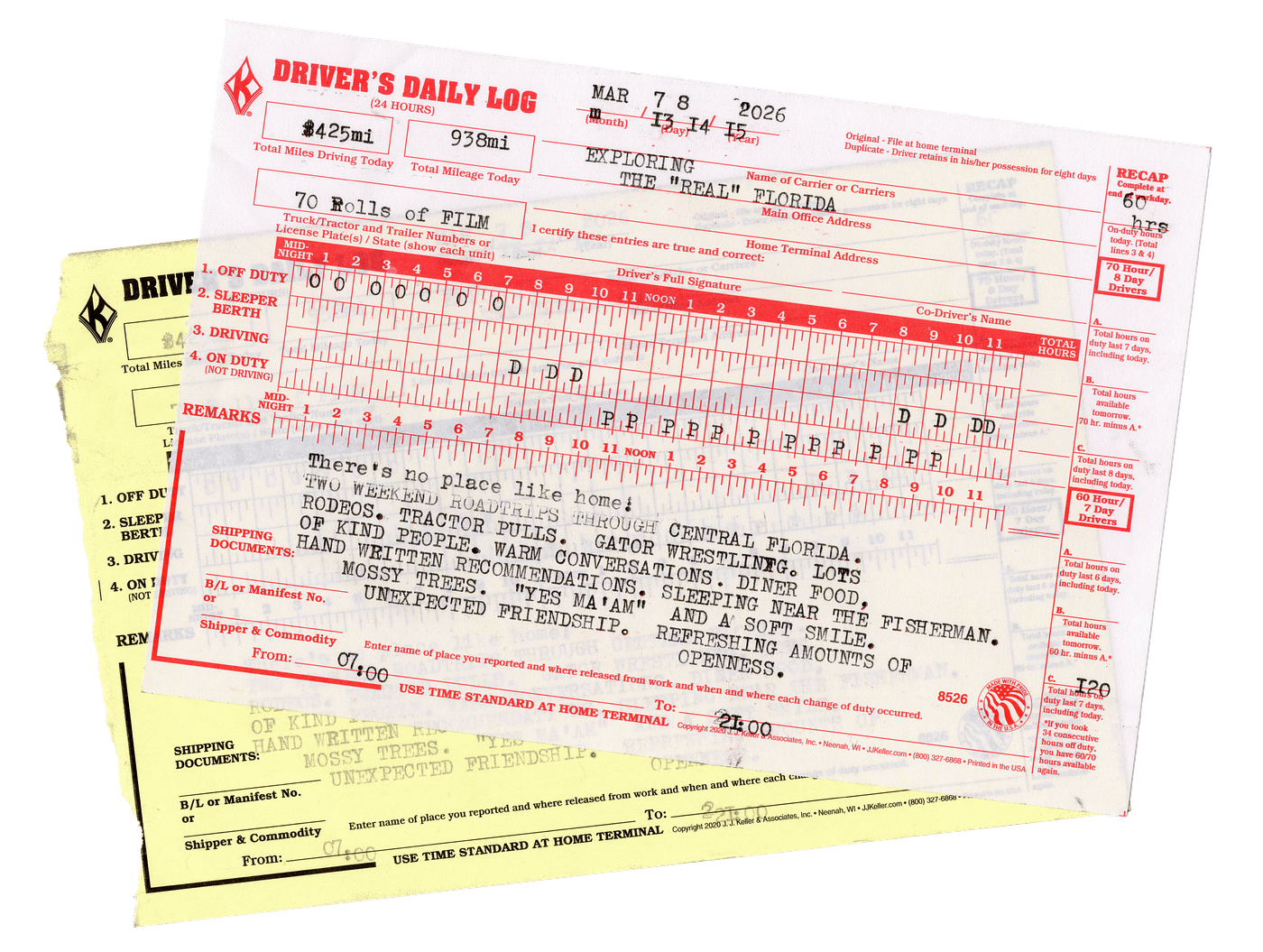
As I sit in my room with the curtains to the side, sunlight pouring over half of my face, I look at all the journals sprawled across my desk, mixed in with notes, receipts, found things, memorabilia. There’s rolls of film that are waiting to be sleeved, numbered, labeled, archived. Making photographs is the first way I attempt to document and preserve—it’s what my mind knows to do best with all of this light. The second, which is equally as important, is to write. When I return to the sanctuary of my room in the evening, a journal must be opened, the type writer must be fed. When I don’t make time to do that, which as of late has been difficult to do, I start to feel bogged down and my mind begins to spin. It’s sort of like a traffic jam in my head, and the longer it is the more that gets lost in the noise, and I start to fear I will forget. I will often use my phone for quick and immediately necessary musings—it’s why there are 7,131 notes in my notes app. These are all good problems, I must remember. Is it not a gift to feel struck down by the joys that life brings?
This spring / summer feels like an important one. I think it’s time we collectively agree to sit in the sun and eat those colorful ice pops you crack in half, and to take a picture even if it’s blurry and jump in a lake with a friend. As the sun returns to wherever you are in the world, apart from those in the South Pole, start thinking of what you want to document, create and remember this season. I think that this year of all years, it is so important that we are outside and remembering what it is to be human with each other. Remembering why it is that we create and write, paint and laugh, swim and hold each other, observe birds and track the movement of the stars.
Our greatest gift as humans is our ability to share and to be understood, and to be on a planet the perfect distance in the sky so that we may soak in the sun without suffering. Maybe this summer is the one you finally make that zine you wanted to make just for you and share it with your friends. Or perhaps its time to finally start writing in that notebook that’s collecting dust, or to buy that camcorder and document the leaves.
There is no right way to live and to enjoy this strangely beautiful experience we’ve all been given, but there is one question that remains as the sun shows its face again: What will you do with all of the light that life brings?
Our Capacity For Wonder
A Reminder To Look Presently In Appreciation
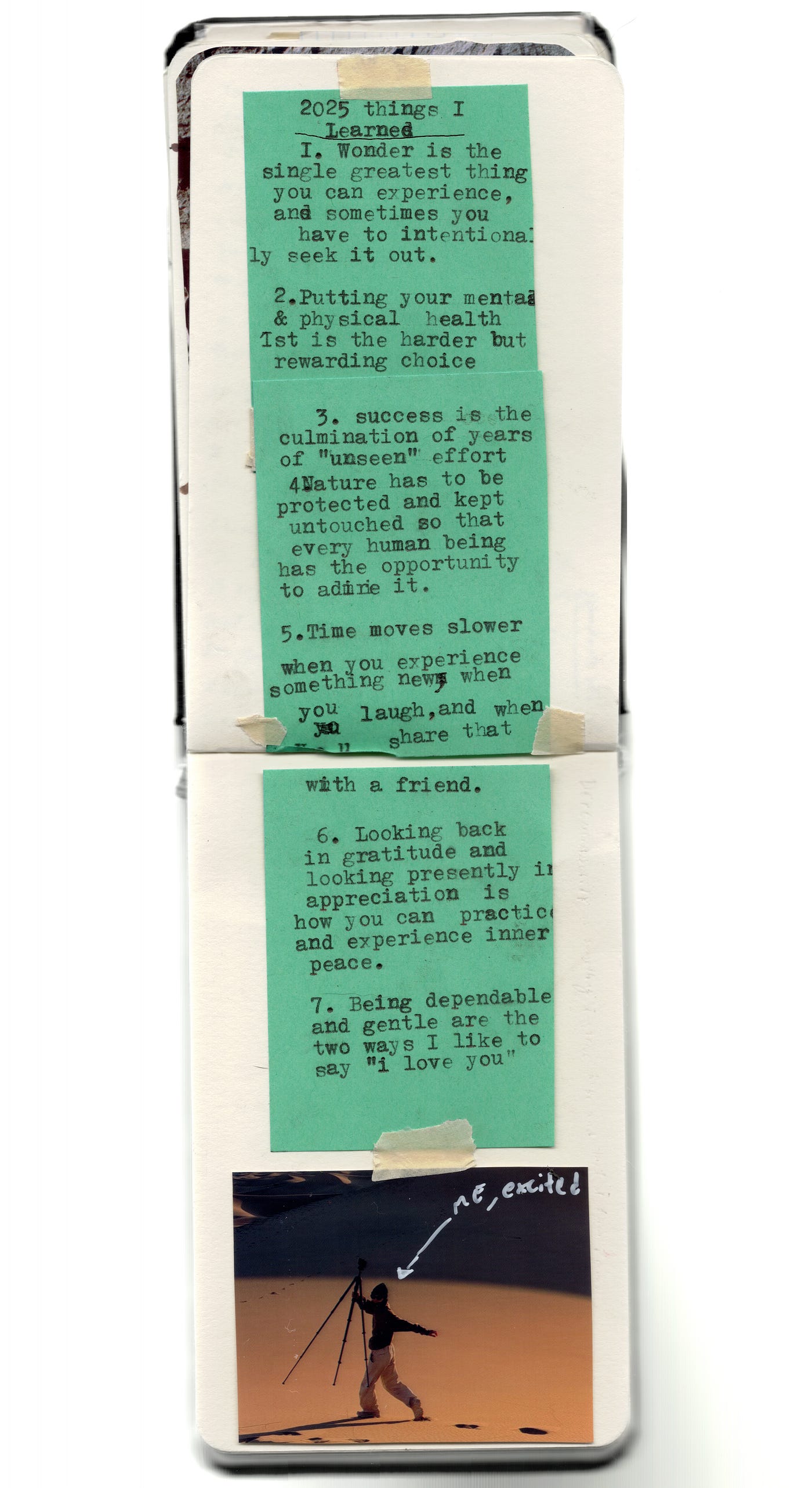
7 things I learned in 2025: #1: Wonder is…
In 2025, I discovered that wonder is one of the most beautiful, human, and extraordinary phenomenons we can experience. I had not given it much thought until I experienced so much of it in a short period of time that it changed my life. Last fall, 6 of my close friends and I packed into a minivan and explored 4 national parks in the west—Yosemite, Sequoia, Kings Canyon and Death Valley. It was a trip that changed my life for many reasons, but the biggest one was reintroducing me to wonder. It also made me realize an important truth: looking back in gratitude and presently in appreciation is how we can achieve and practice inner peace.
“Wonder: a feeling of surprise mingled with admiration, caused by something beautiful, unexpected, unfamiliar, or inexplicable.”
Experiencing Wonder
Packed into a car like sardines, though lovingly so, we drive into Yosemite’s valley. We’re surrounded by coniferous trees and towering walls of granite, meadows that seem to sing and distant waterfalls that quietly rush. I’m leaning forward from the last row of the car, my torso squished between the second row’s arm rests. The open windows give me the gift of crisp October air.
I’ve Been Young is playing over the speakers, a song that does that wonderful thing music can do, which is to swell instrumentally and create a sonic atmosphere that makes something inside you twist. The lyrics are hard to understand, but the one phrase ringing over and over is “I’ve been young”
I peer outside the windows in complete awe, and all at once I feel tears streaming down my cheeks at the sight of the mountains and rocks, the trees and grass. Everyone in the car is either silent, in tears, or audibly marveling at the sights around us. The day has already been one filled with new sights and sounds, but this moment seems to catch everybody by surprise. I’m stuck in a shifting state of disbelief for the grandness of the world around me, and with a smile I watch the trees as we pass them by and listen to the wind.
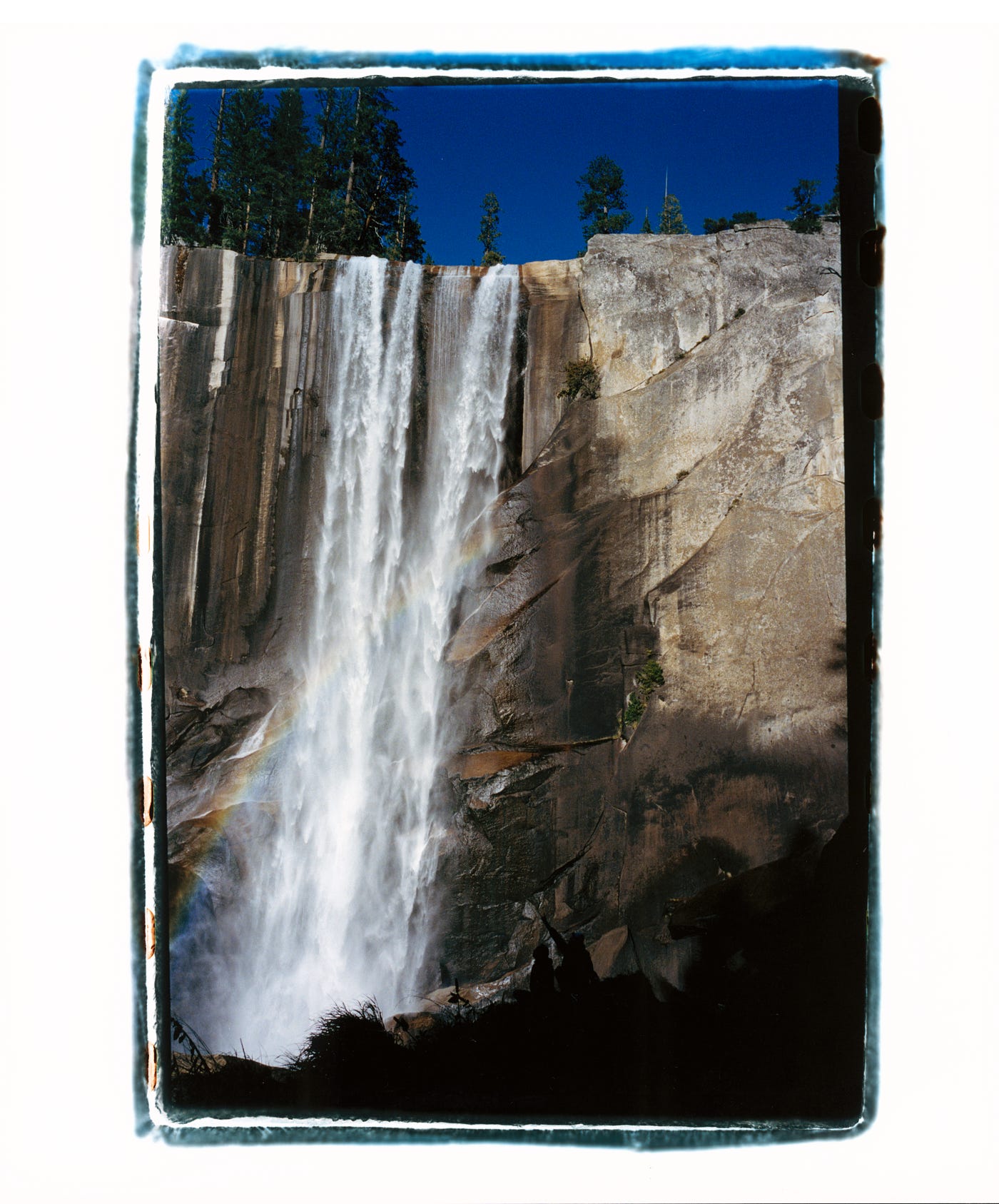
“An experience evokes a “need for accommodation” when it violates our normal understanding of the world. When a stimulus exceeds our expectations in some way, it can provoke an attempt to change the mental structures that we use to understand the world. This need for cognitive realignment is an essential part of the awe experience”
#2: Look Presently In Appreciation
7 things I learned in 2025: #6: Looking back in gratitude and presently in appreciation is how you can practice and experience inner peace.
It is easy to look back in anger, regret, sadness, etc. It is harder to look back in gratitude. I learned over the years that being able to look back at people and situations that hurt you with gratitude is the kindest thing you can do for yourself and others. Given enough time and space, the past can be something that you look back at with only gratitude, and it is one of the most empowering and freeing things I have experienced. It is easier said than done, and requires you to do the work, but it is worth it.
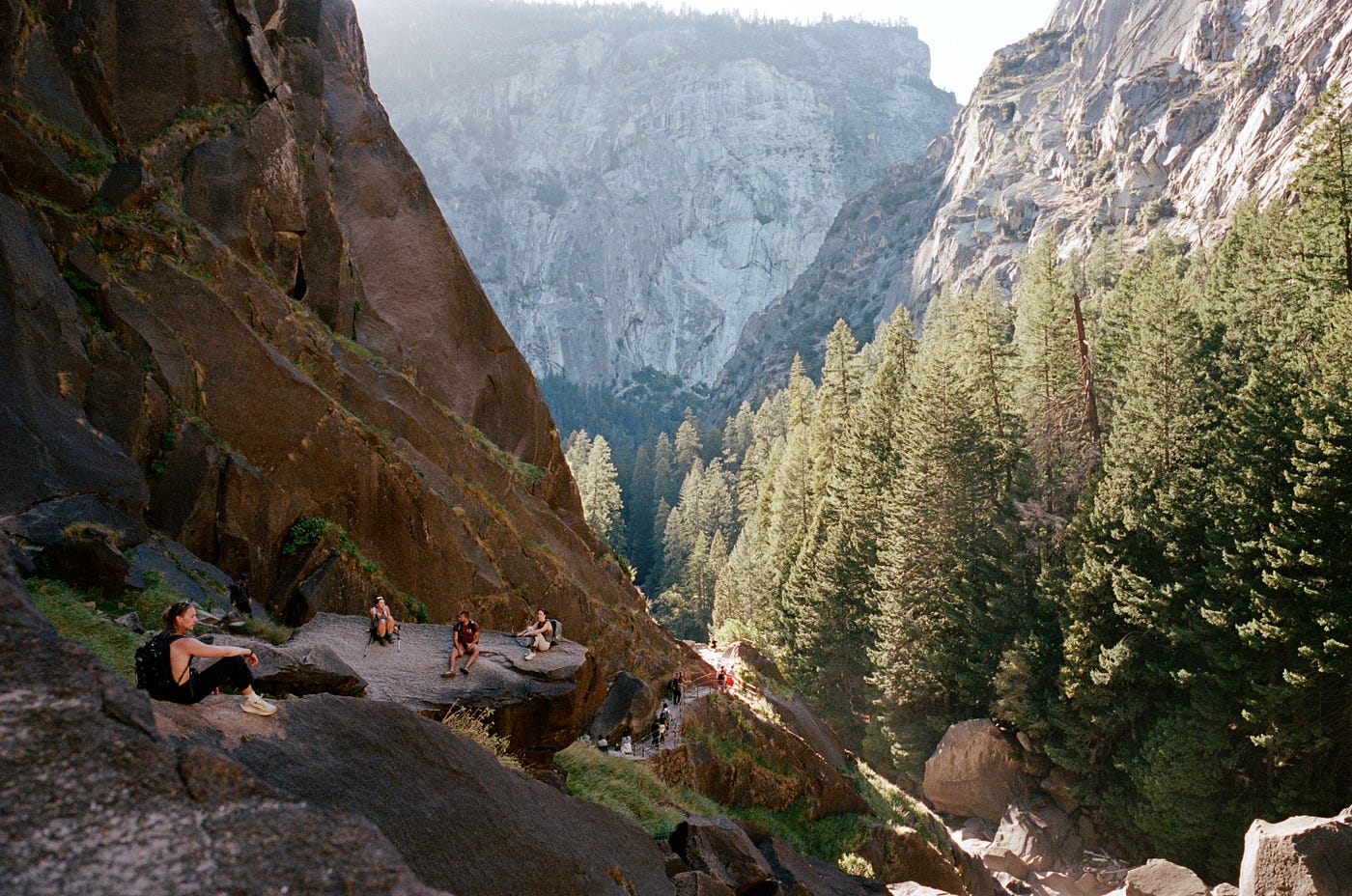
With that same gratitude you give to the past, its important to give that gratitude and appreciation for the present. When I was going through a rough patch a few years ago, and nothing in the world seemed to be able to remind me of what mattered, I made myself sit each day and write a gratitude list. Eventually, I found that I started finding gratitude even in my inconveniences. When I found gum stuck to my favorite sweater, I focused I on the gratitude for my Mom washing it for me and knowing how to get it out.
gratitude list
january 6, 2024
- macy’s 9th floor furniture
- dimly lit bars
- hidden gems in china town
- pictures in the back of a phone
- missing happy hour twice in a row
Sand Dunes And A Moon Rise
The sky is so dark that the moon rising is what has woken me up. It’s a waning gibbous, the phase right after a full moon, and its’ light has pooled into the minivan, where my friends are all asleep. It’s the only bright thing in what feels like the whole world, and I wake up in a fright thinking somebody is shining a flashlight in my face. Scrambling to put my glasses back on, I realize it’s just the moon rising amongst the twinkling stars in the sky. I didn’t know the moon also rose, but it makes sense when you say it out loud. I’ve settled into my chair again, and my fear has shifted into a surprised but grateful awe.
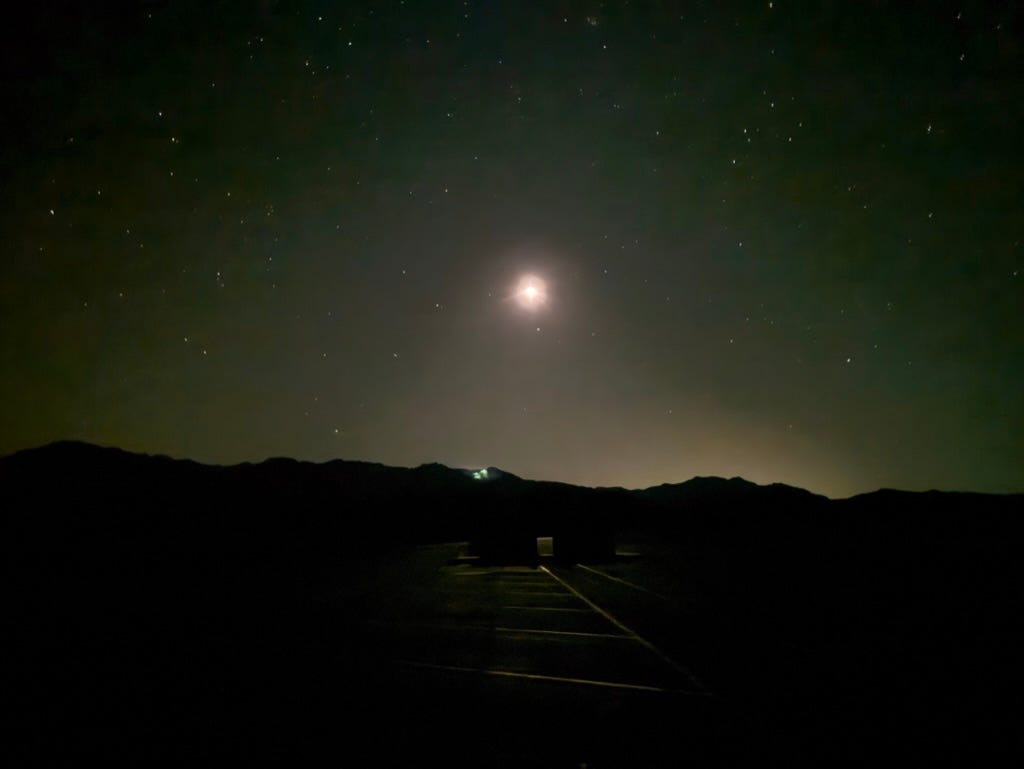
Outside the minivan is complete and total darkness. It is so dark that I can’t make out much apart from the vague shapes of mountains and rock formations in the distance. We are taking a brief nap before continuing on our goal of star gazing throughout night and into the morning to watch the sun rise over the sand dunes. It’s so quiet in the car that a small shifting in my seat is noticeable—the sound of my windbreaker crinkling against itself feels as loud as an alarm.
Eventually we continue on and drive to the top of a peak called Dante’s Point to watch the stars glimmer above a basin. The light pollution from Las Vegas appears as a grey gradient on the other side of the horizon, erasing some of the stars with it. In the absence of the sun, even the hottest point in North America becomes cold, and so we run around and jump to keep ourselves awake, excited and warm.
Once it’s closer to dawn, we begin our hike of the dunes in darkness. Our phones have been rendered useless for the past week, and so intuition guides us in the absence of a pre downloaded map.
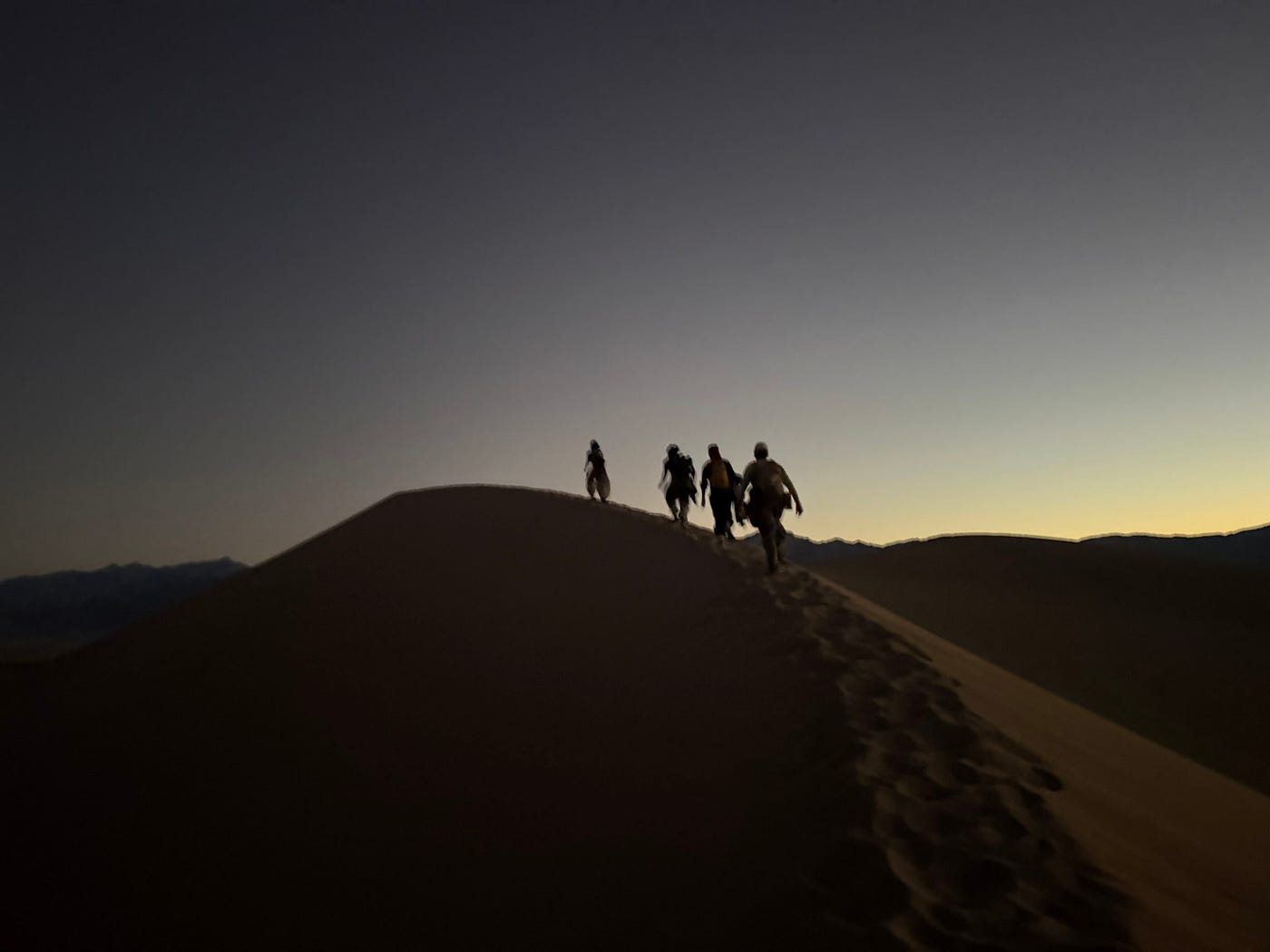
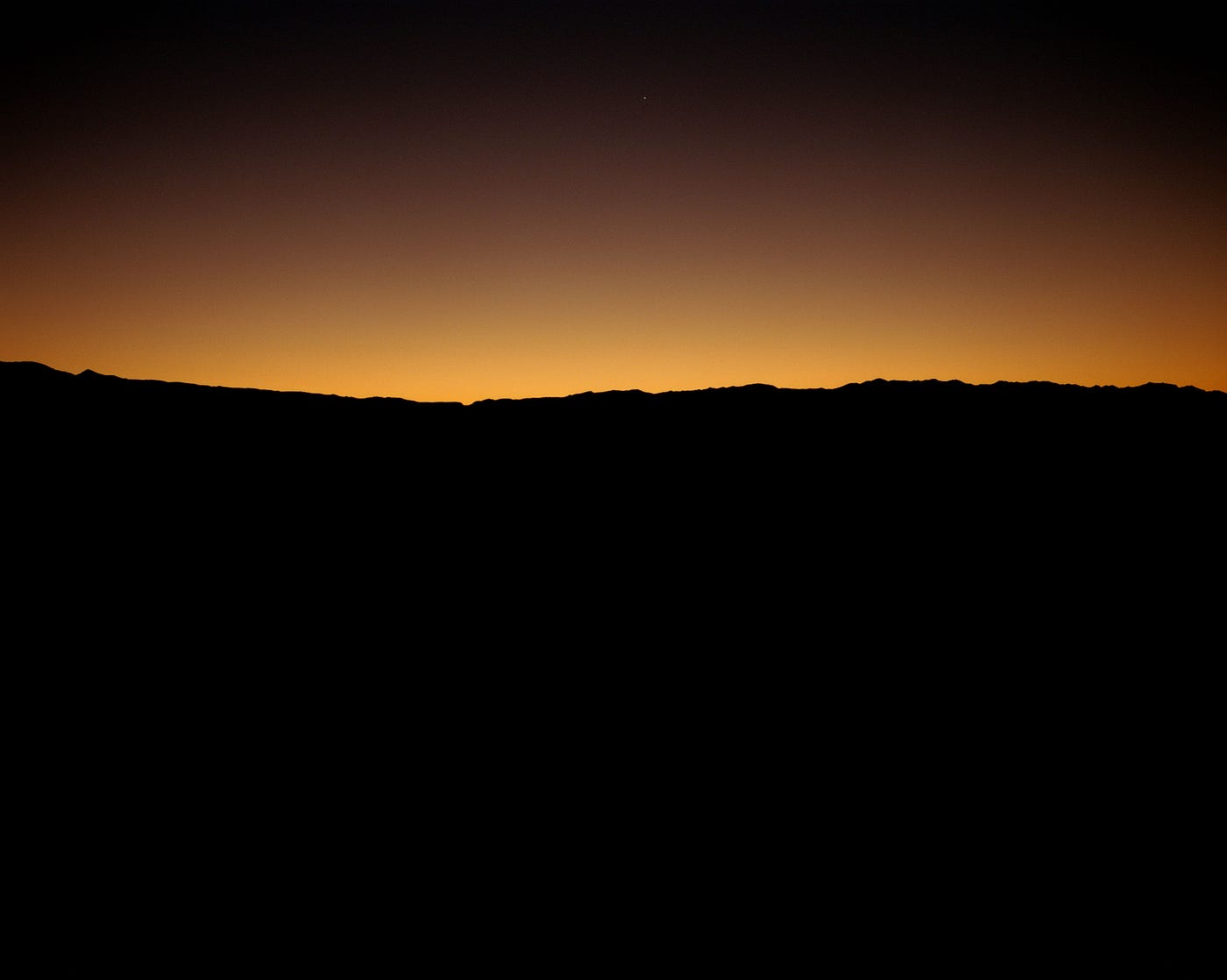
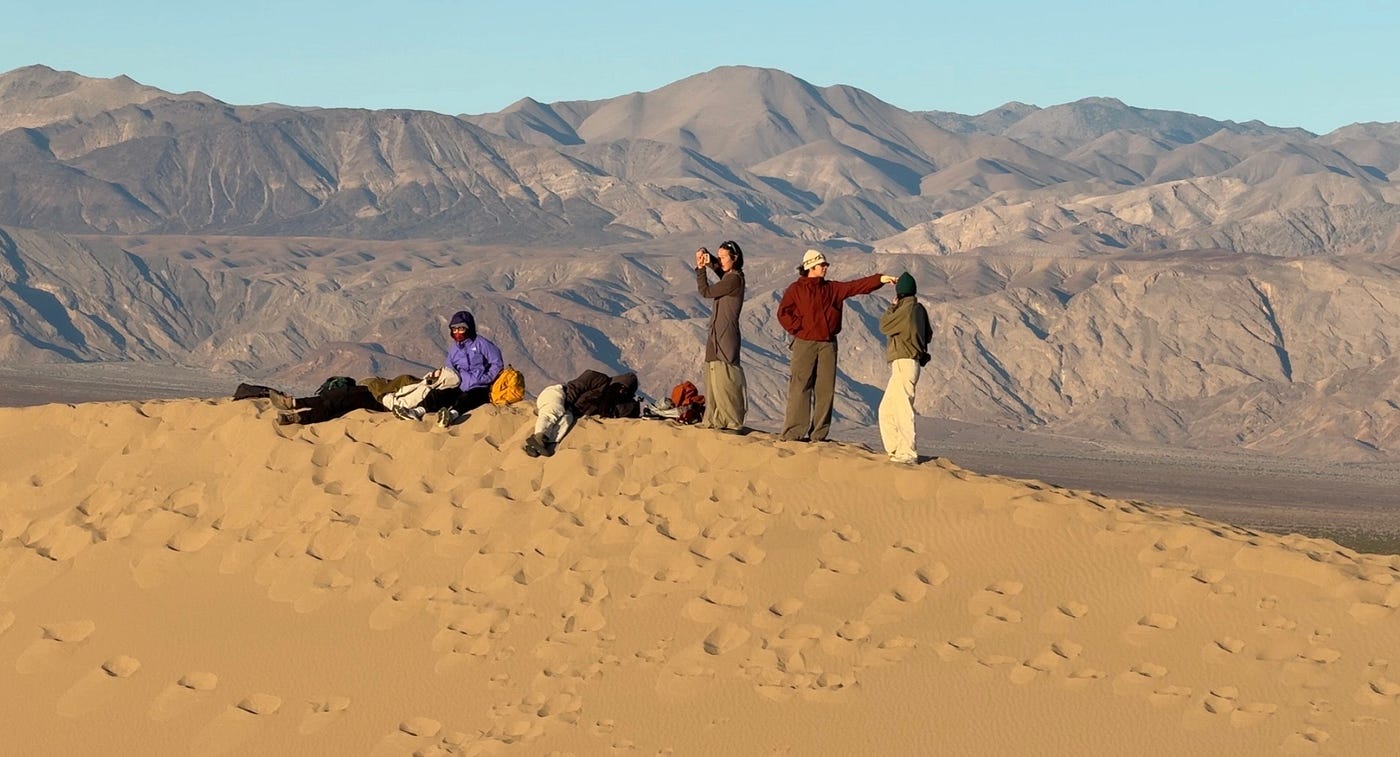
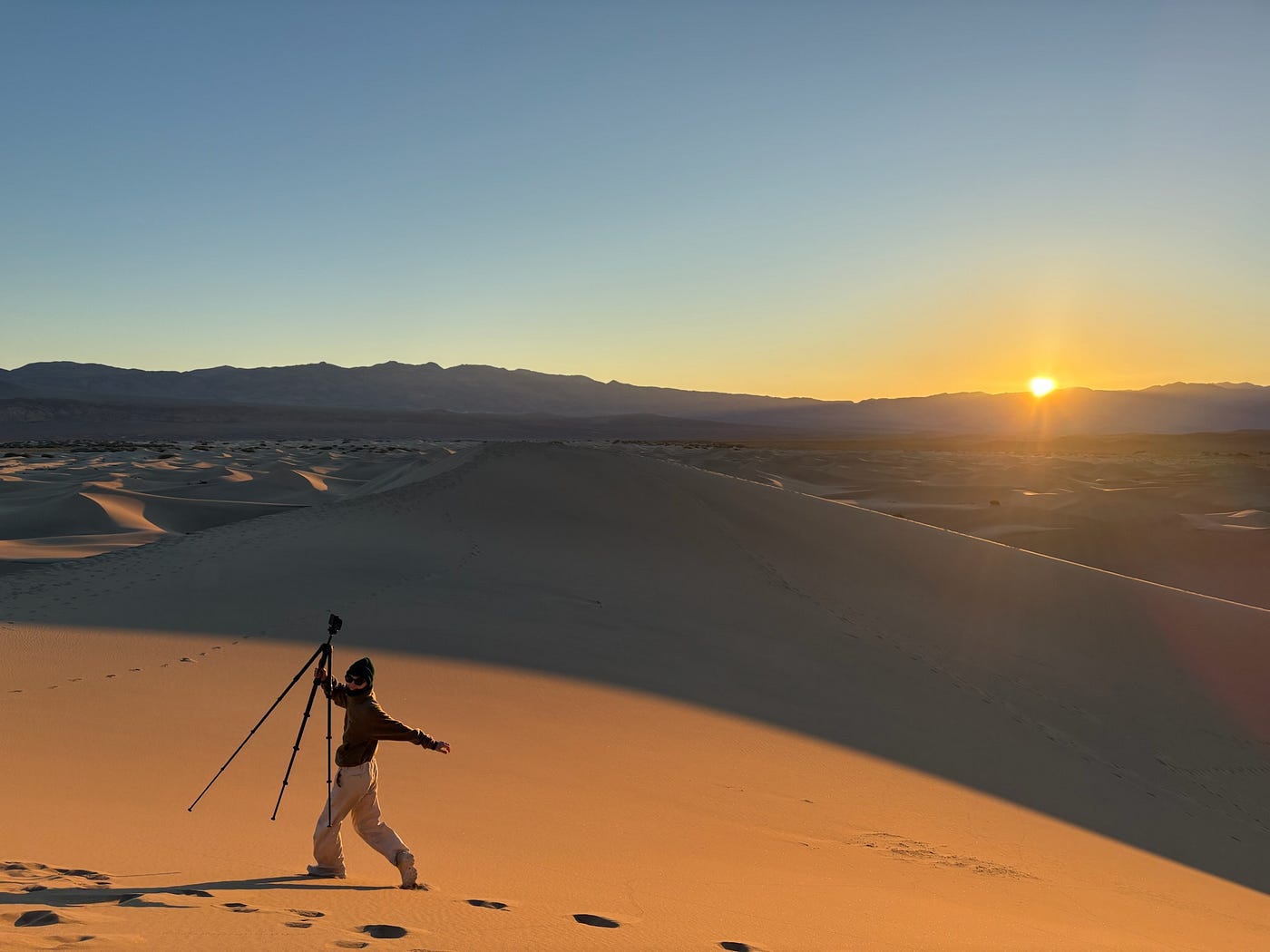
Somehow we reach the tallest dune. Breathless and sleep deprived, we look out at the horizon to see that the sky has shifted into nautical dawn, or twilight. The sky has transformed from black to grey, from grey to blue, blue to purple, purple to a deep gold. The sun is below the horizon still, but as it nears the peak it makes itself known through its array of oranges and yellows.
We sit in silence and wait for the sun to arrive.
Time moves so much slower when you are present. It is a gift.
Finding Wonder In Your Every Day
I think part of being a photographer or any artist for that matter is finding wonder in your every day, or in the things that other people don’t notice. It is easy to experience awe at a big, beautiful sand dune, but harder when you’re in the normalcy of your days. Studies show that frequently experiencing awe can reduce markers of chronic inflammation, increase outlook on life, reduce stress, boost creativity and humility, among other things. Learning how to look for it takes effort, but once you learn to see awe in everything around you, the world becomes a kinder place.
This reminds me of a quote by John Green in his book The Anthropocene Reviewed, which I highly recommend.
“I still sometimes stop hearing the tune. I still become enveloped by the abject pain of hopelessness. But hope is still singing all the while. It’s just that again and again and again, I must relearn how to listen.”
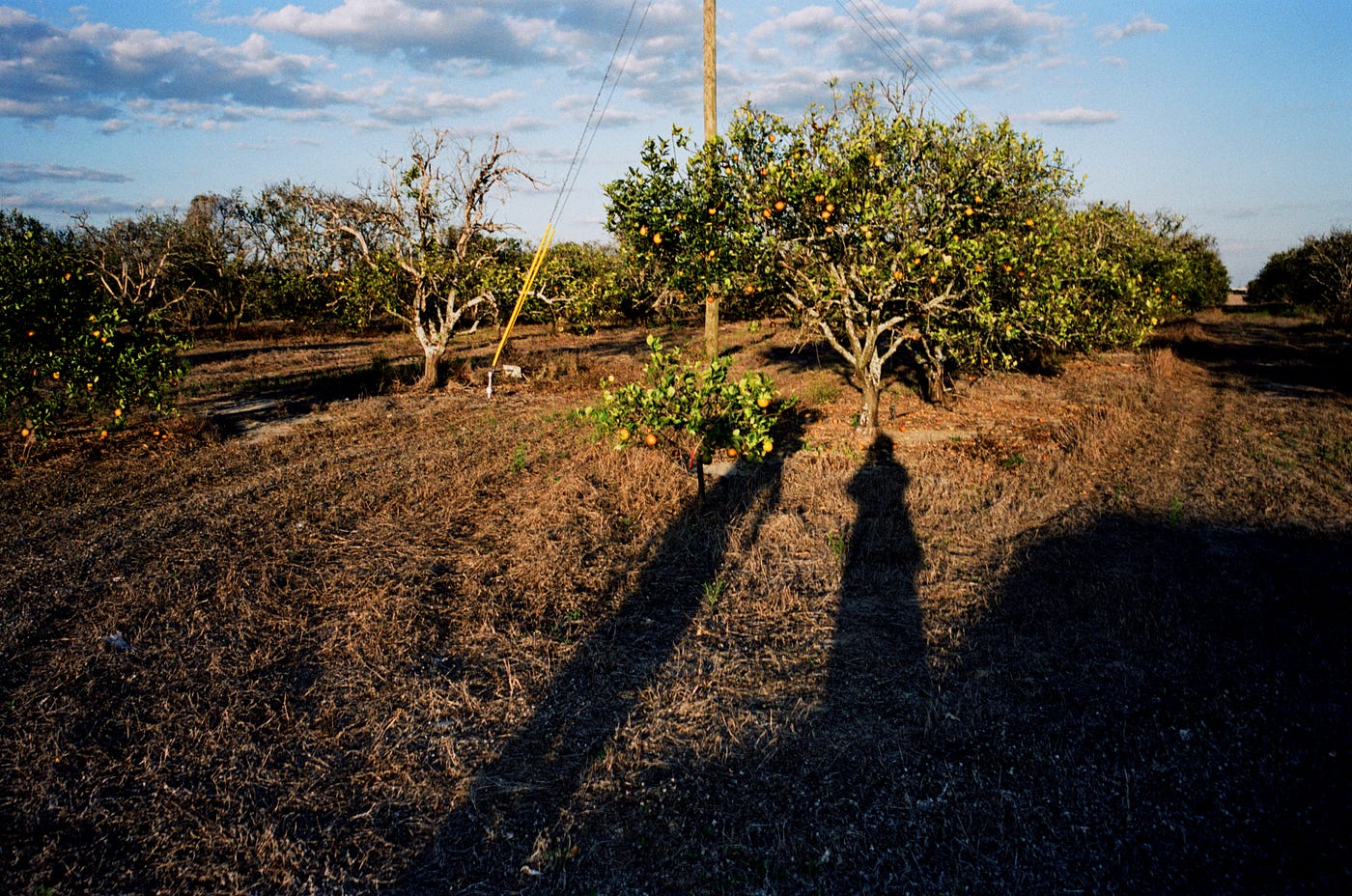
Next time you’re outside, take an extra moment to look up at the trees above you and watch how the leaves move in the wind, or how the ants crawl around the pavement below you. Listen to a stranger. Find gratitude in the uncomfortable. The next time you look down at your hand, look at all the lines, ridges, bumps, freckles. Pick an orange from the side of the road. Can you find something around you that elicits awe? Awe isn’t something to be forced, but if you can learn to look for it, you’ll see that everything around you has been waiting to be appreciated.
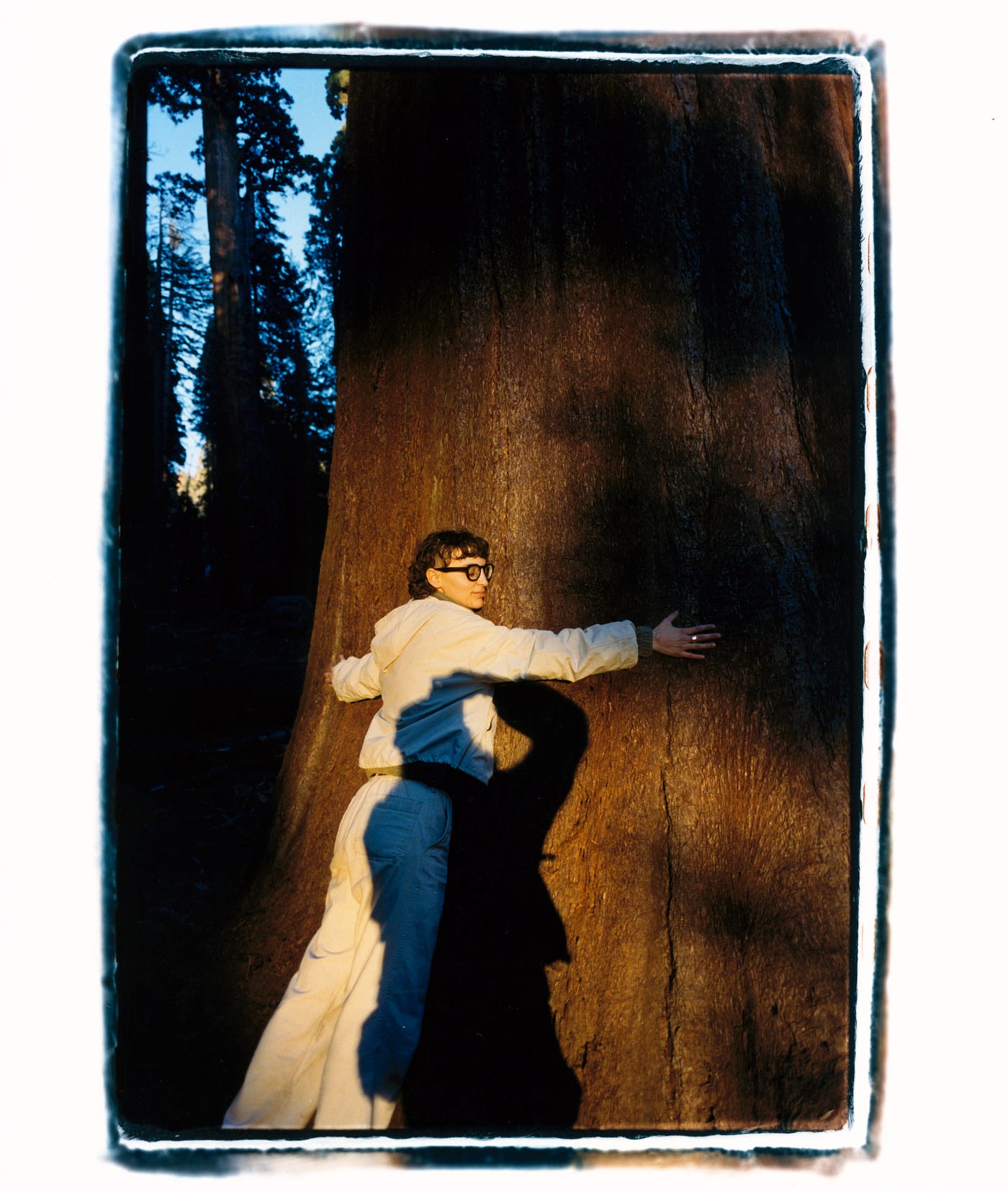
Photography Is Not My Full Time Job. It’s Still My Profession.
Success is a slow moving, but ever rewarding process.
When it comes to the photography world and art world, there is one taboo subject no one likes to talk about…
Is this your full time job? How do you make money?
There’s a notion in the art world that to “make it” as an artist, you have to have your passion 100% fund your life and be your main source of income, and if it isn’t, you’re not “professional”. I can’t tell you how many times I’ve had this conversation:
“So what do you do?”
“I’m a photographer.”
“Oh cool! Do you do freelance then?”
“No, I have a full time job. I still pursue photography professionally though.”“Oh so you’re not a professional then? Photography is your hobby?”
“No, it’s my profession.”
This conversation reveals one hidden idea many people have: “Since you’re not capitalizing on this activity, it must be a hobby. You have to make money off of something for you to be considered a professional at it.”
Sheesh. How depressing.
Now don’t get me wrong, is it nice to be paid for something you’re passionate about? Yes!
But why does your value, validity and respect as an artist have to be directly related to how much money you make off of it? Or if you make any at all?
I’ve found that a lot of photographers and artists do not openly talk about this very often. Which leads to people who are looking to get into art feel discouraged when they can’t make a living wage off their art and they feel like they failed. But the truth? A lot of artists have other sources of income!
Is this an American problem?
It might be a very American way of looking at it. I’m not really sure. I know in some cultures, people do not ask the “what do you do?” question or expect the answer to be about what makes them money. Instead, when asked about how they spend their time, they respond with their hobbies, passions, or what they do to live. In America we refer to our jobs as “how we make a living”, but I’d argue that for some people, the job that gives us income is not what we do to live. Our passions are.
In America we are obsessed with the questions “What did you study?” and “What do you do?”. We want to know how you’re going to contribute to the system and what qualifications you have to do so.
I remember in college I started making a concerted effort to stop asking people about their major or job, and instead I’d ask “How do you spend your time?” 90% of the time, people were taken aback, and pleasantly surprised.
“So…. what’s next?”
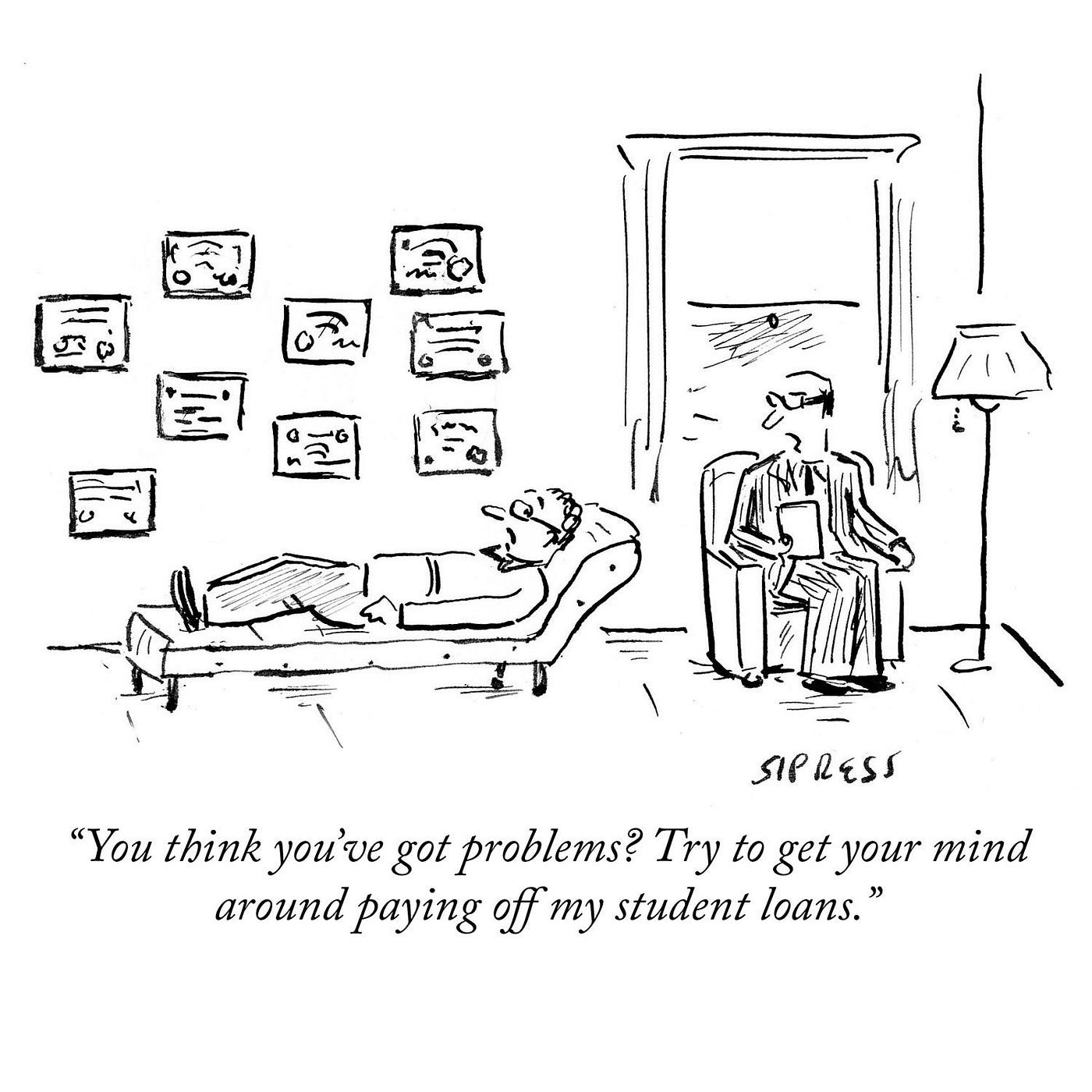
When I graduated from NYU with a bachelors in photography, I wondered what I should do next. I felt the pressure to get a job in my field, or to be booked and busy with freelance gigs to make money with my camera, but none of it appealed to me. I felt the pressure that I had to get a job in my field to make the mountain of student loan debt I had taken on worth it. Photography was always a deeply personal, special and sacred thing for me. I was not interested in commercial photography or concerts or any of the other fields that you could make good money with.
I also felt the pressure to be successful right away. I remember when professors would ask me what I was up to a year after graduating, and the truth was that I was still landing on my feet, and I didn’t have any success marker to give them. I remember feeling like a failure.
Success is a slow moving and rewarding process.
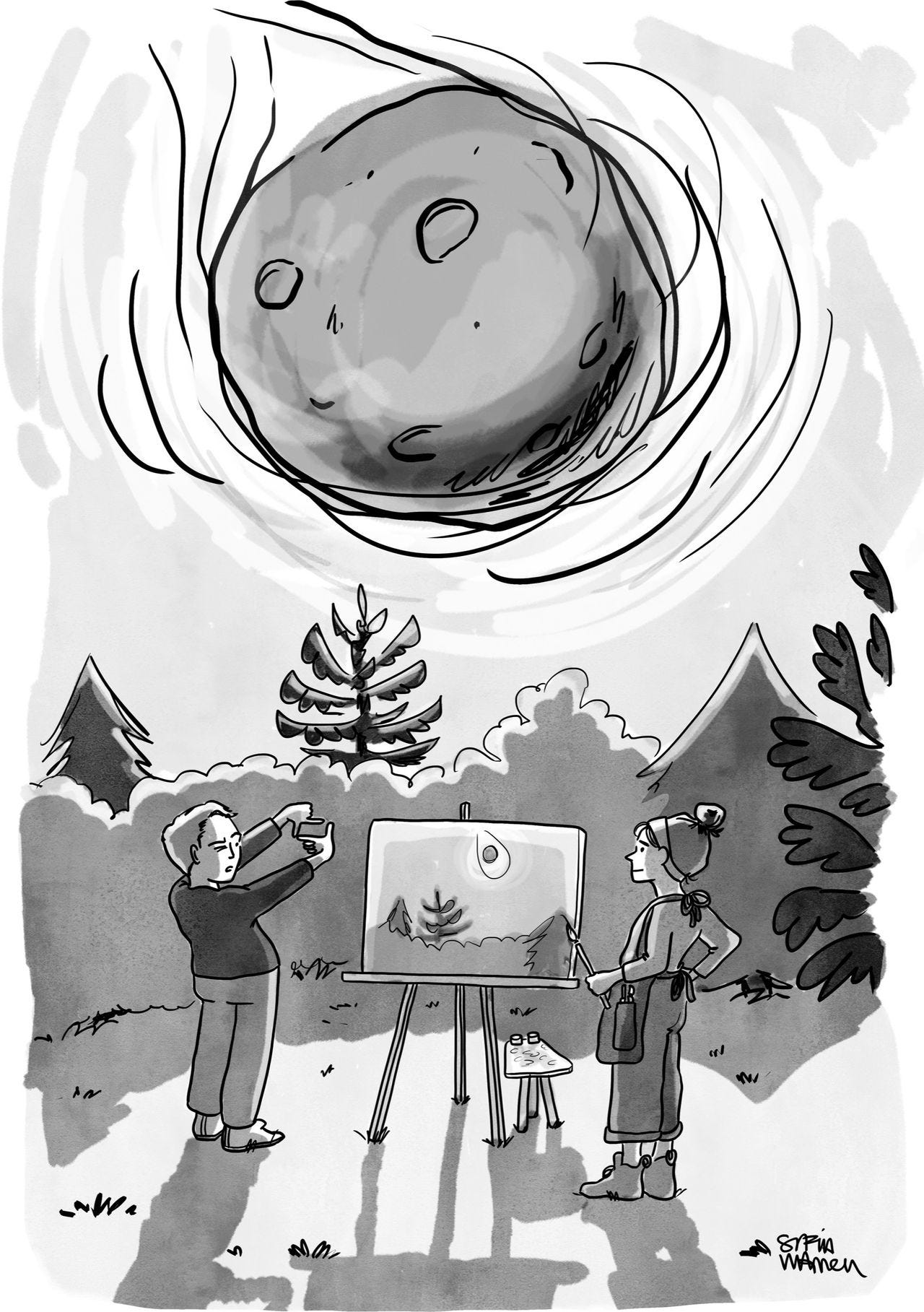
I did not start being “successful” with my art until this year, which is 6 years into sharing my work online. But this doesn’t mean what I was doing in the past 6 years wasn’t success. I was building and building and improving and growing. Over the past 6 years, although I hadn’t done any gallery shows or been published, I was slowly making progress by meeting mentors, connecting with the community, sharing my work little by little, until I had grown a network of trusted and good people around me that became my biggest cheerleaders. And when they had or heard of an opportunity I would be good for, they’d always let me know.
I spent most of these past 6 years quietly and diligently working on my craft, improving each year in my technical ability and honing in my style. No matter how many people saw it, I still shared my work as if thousands were seeing it. Or an editor who could give me a shot saw it. But ultimately, I was sharing and working on it for me, because photography is what I am most passionate about in the world.
It was only until this year that the number of eyes on my work really grew. I had about 4,000 followers until this year. But I still shared my work the same as if I had 20,000 or 50,000 or 100,000.
This year I got some of the biggest opportunities of my career so far. I was asked by a major NYC magazine to do their annual cover story, which I turned down for various reasons, and I was asked to be in the NYT twice, which also didn’t work out for various reasons. Even though I wasn’t ultimately published this year, I realized my name was starting to circulate in rooms that mattered. I also gained my first sponsorship this year with Squarespace. It is nice to be recognized for something you work so hard at. It is even more rewarding when you’ve been patiently working on it for a long time.
“How do you still find time to pursue photography?”
I’m a bit insane when it comes to photography. When I tell you that almost every waking second that I’m not at my 9-5 desk, I’m working on photography, I mean it. But I love it. To me it doesn’t feel like work, it’s exciting and sometimes tiring but overall fun.
Before I go to work, I spend 1-2 hours once I wake up working on Substack posts, updating my website, video ideas, brain storming, etc. Once I get home after work, I work on residency/grant/competition applications and email pitches. I try to submit at least 2 of these every month. I also use that time to research new places I want to go, project ideas, working on my in progress projects etc.
To go visit new places and explore, I either take time off or I leave on a Friday after work and return Sunday night or Monday morning very early to make it to work. Sometimes I’ll work remote, but I’m often squeezing in trips and shooting wherever possible.
There’s a great Martin Parr quote where he says that to be a successful photographer you have to be a little manic. It has to be what you live and breathe. I often wish I had more time to work on my photography, but the stability of a 9-5 job gives me makes it worth it. It gives me:
- The financial ability to pursue a notoriously expensive field
- The peace of mind of not having to hustle with something very sacred to me. I think if I had to use photography solely to make money, I would start to lose my spark.
This doesn’t mean I don’t ever want to make money with photography. That would be a nice byproduct, but it isn’t my ultimate goal. It isn’t why I do it. All I care about is making photographs of the world around me and sharing it with others.
All I can tell you is what I do and why I do it. Everybody is different. I thought it would be helpful to open a conversation that is not often had in our community. I’ve gotten messages before of people asking me if photography is my full time gig or how I fund what I do. I think it’s helpful when people openly say “I have another full time job and profession!” It helps others not have unrealistic expectations, and to not feel bad if they aren’t doing photography full time, which is the facade many online seem to give.
What I do also want to say is that this isn’t easy, but it is rewarding. Which is why you have to be incredibly passionate about your art. That’s the only way I’m able to get so much done while having another 9-5 profession. Photography is the reason I get up in the morning. It is what brings me joy more than anything else in this world.
I hope this post was helpful in debunking and demystifying the life of an artist a bit. To all artists reading this, I wish you luck on your journey! And remember to be patient. Success is a slow moving, but ever rewarding process. When you don’t think anyone is watching, someone is. When you don’t think what you’re doing matters, it does. It is all accumulating and building until one day you wake up and see how far you’ve grown.
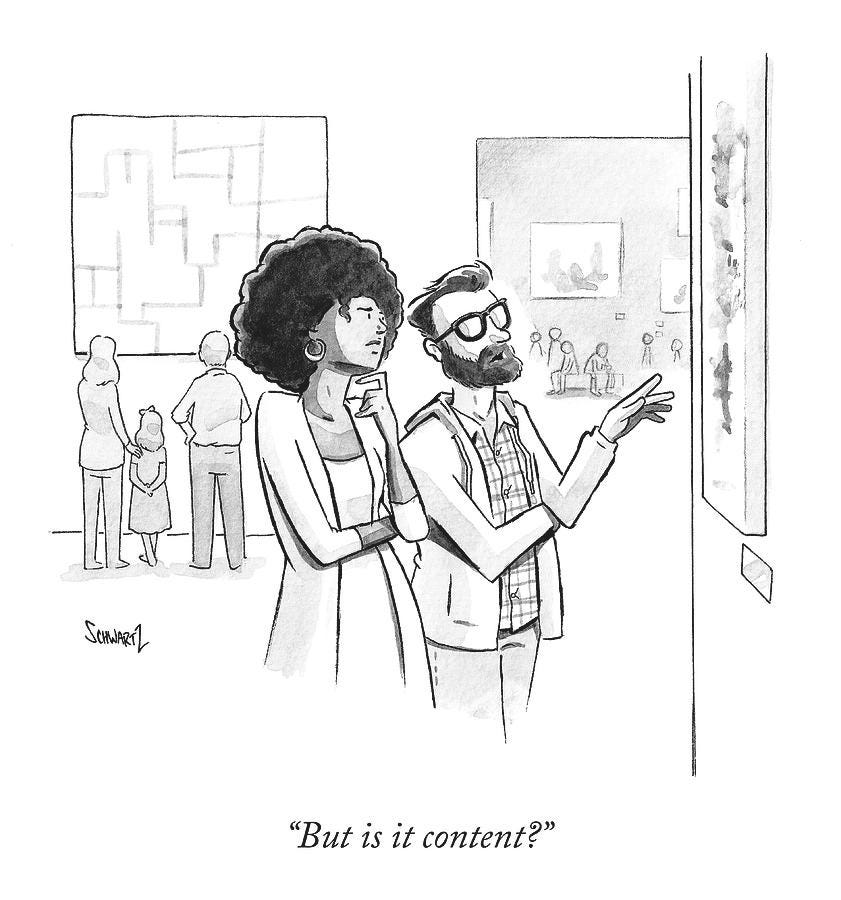
It is hard to be an artist in a digital world, but it is also a blessing. We live in a time when anyone around the world can see what you do. So share widely and share often. Now what you think others want to see, or what you think will go viral, but what you want to make and share. You never know where it will take you.
Until next time!
Nat
And thank you to one of my best friends, Rob, who came into my room one day while I was working on my photos and suggested and encouraged that I write this post.
The Importance of A Process Notebook
Your process is your unique fingerprint as an artist
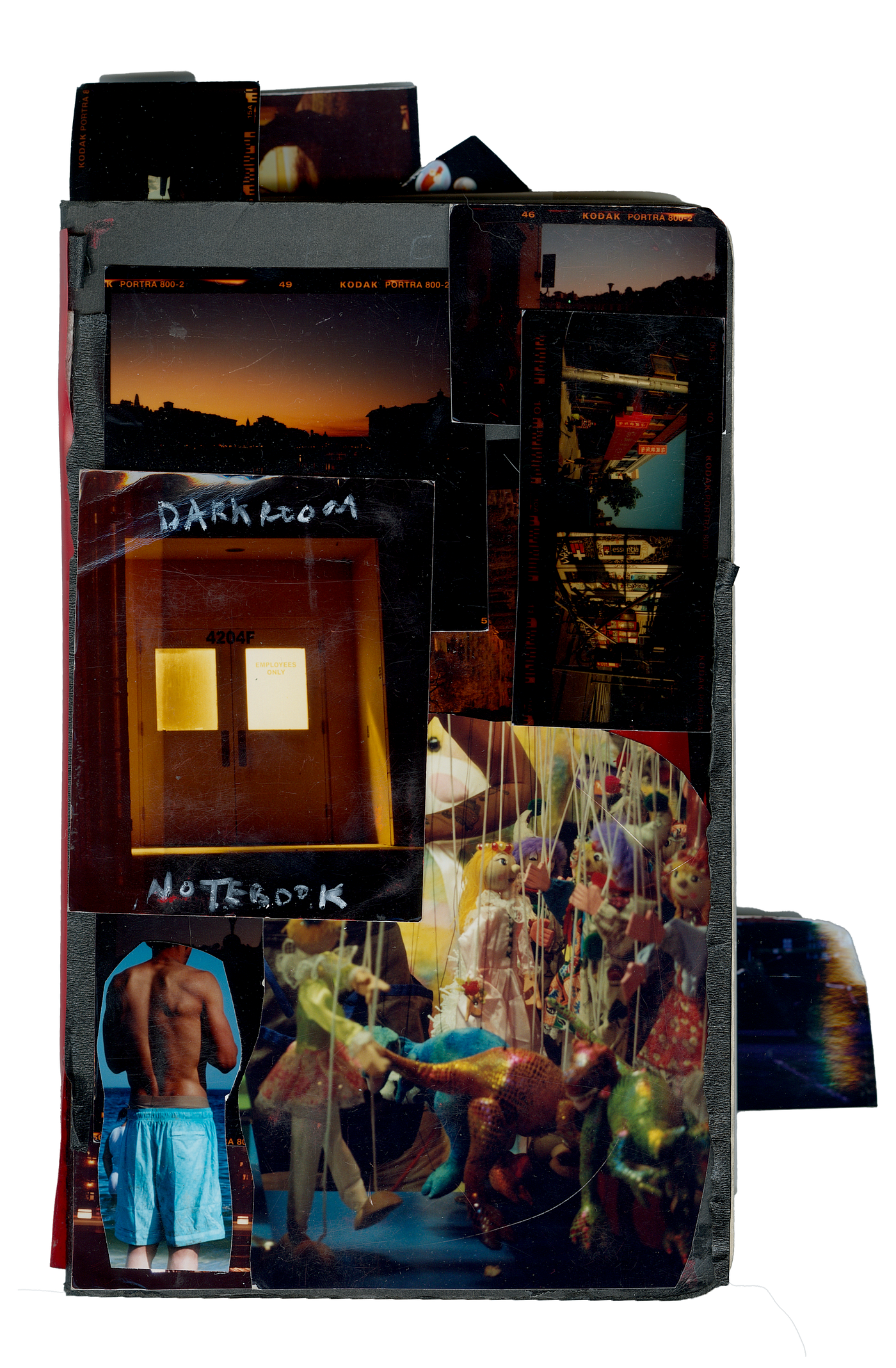
If you were to look in my room, among the many boxes of prints and negatives, you would find a small wooden crate called “Journal Crate”, housing the many many journals and notebooks I have accumulated over the years. There are many empty notebooks. Many half finished journals. Some fully finished journals. Kinda-sorta finished journals. Some notebooks that weren’t nice enough for me to want to use. Some journals that were too nice that I didn’t want to use either.
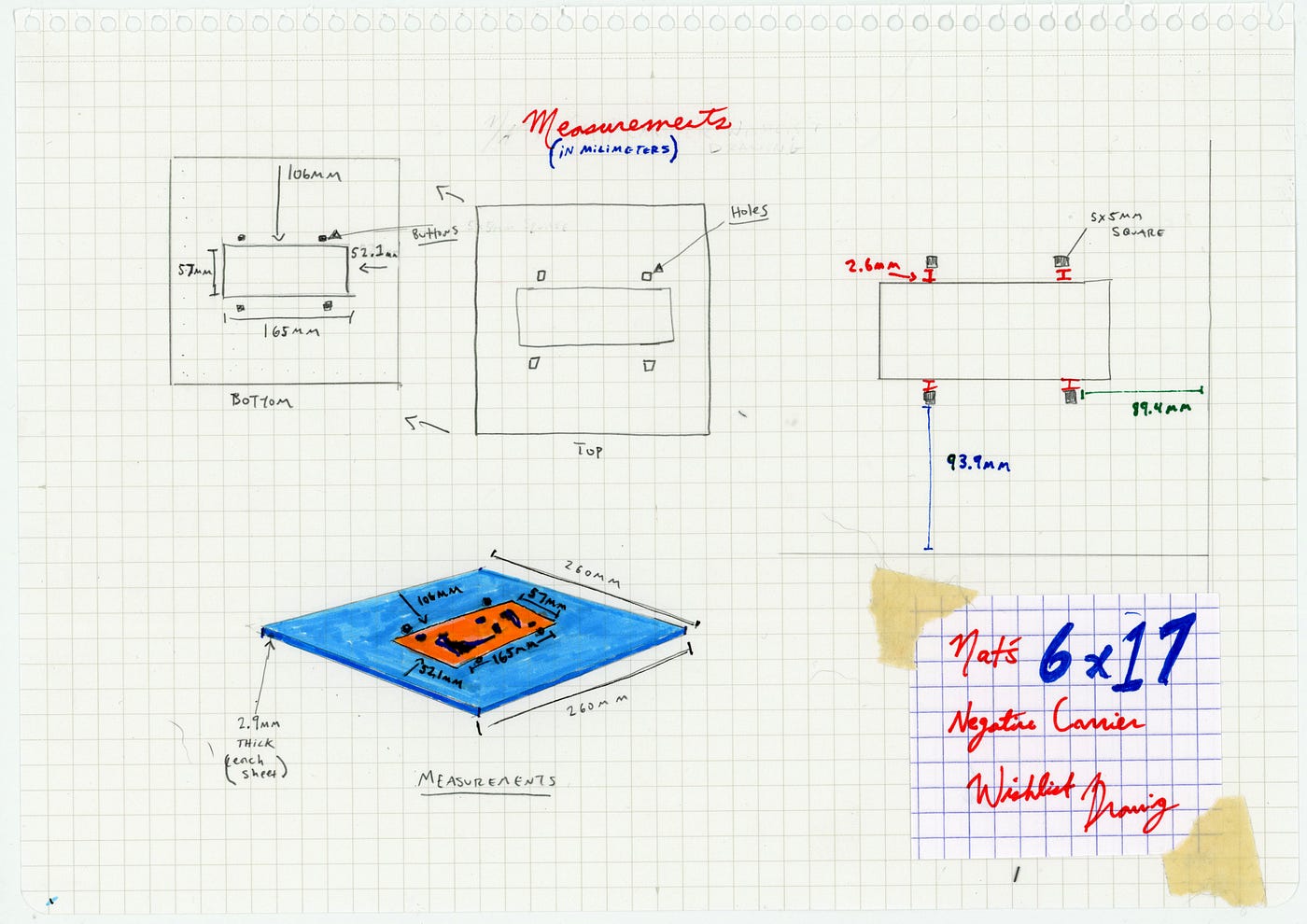
Among these journals there are always scraps everywhere. Prints. Photos. Tickets. Museum maps. Stickers. Diagrams. Photo booth strips. Musings. Notes. Ideas. Letters from friends. Etc.
You’re probably wondering why I’m talking about notebooks. Well, I believe that notebooks or any vessel for that matter that documents your artistic process can answer the dreaded question every artist gets:
“What makes your art different? What do you have to contribute to the conversation?”
I could write a whole other newsletter detailing why I dislike this question. I understand the reasoning behind why it would be asked and why its important, but I also think it leads people to sometimes try too hard to add meaning to their work that just isn’t there. I also think its sometimes not relevant. Does every piece of art need to contribute something “new” to a conversation or comment on something?
Sometimes the meaning / purpose / reason behind your work can be as simple as your unique fingerprint as an artist. Every person has a unique way of viewing the world and expressing that. Every artist is a mosaic of artists they love. Instead of searching so quickly for meaning, I think artists should try searching for passion first. I find that meaning follows passion, not the other way around. At least for me anyway. I find that when I pursue a subject or something I am passionate about, over time the meaning comes.
Okay so back to notebooks..
Why Document Your Process?
“You have a unique talent and a unique way of expressing it. There is something that you can do better than anyone else in the whole world and for every unique talent and unique expression of that talent, there are also unique needs. When these needs are matched with the creative expression of your talent, that is the spark that creates affluence. Expressing your talents to fulfill needs creates unlimited wealth and abundance.” - Deepak Chopra
The way that you make or approach art can often be your unique fingerprint as an artist. Where do you make the art? What does that space look like? When you take a photograph, what sounds were around you? When you look at a darkroom print, what do you see? There is no one else on planet earth that will make, approach, create or see something the same way you do. This is not a ground breaking sentiment. But how can we learn to translate this?
I challenge you to start documenting in a journal. Get one that you do not care about. Don’t focus on how it looks or how the paper feels. You can’t get a notebook so pretty that you’ll be afraid to “mess it up”. (Maybe this is just me) You want to actually pick it up and document what you do. Overtime, the notebook will become personal and yours. Maybe you can even translate it later to a prettier medium once you get all the thoughts out. The important thing here is that the barrier to entry is low. You want to document and record your process as it comes. Remember, no one else on earth will do this the same way you do. It’s much easier to copy a final result, than it is to copy the reason, approach, care, love and ethos of why an artist does what they do. That is impossible, in my opinion.
So what should you document? Here are some suggestions:
- Write down sounds you hear, things you see, other pieces of art you like. Start with the observations you make as you create art, or as you think about creating art.
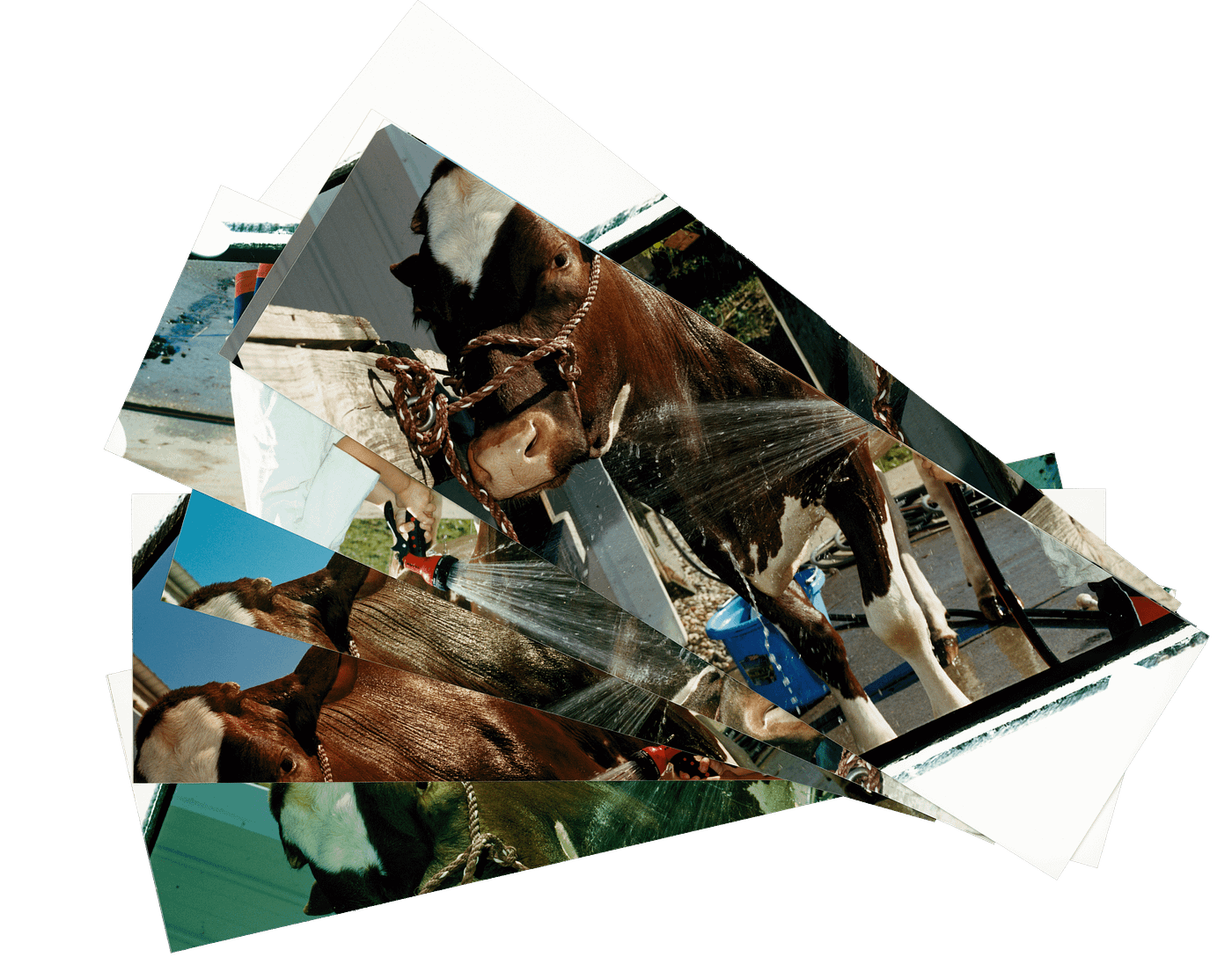
- Keep scraps of prints or in progress work. They often tell a story that is hard to communicate verbally.
- Write down bad ideas. Even if you know they kinda suck. Even if you know you won’t use it. Remember, this is about process! Not final result! It is supposed to be messy. I can’t stress enough how important it is to get rid of that barrier in your mind. This is not a final product.. it does not have to look a certain way. It will come with time…
- Tape things inside of it. It could be a flyer from a gallery show you saw that inspired you. A photo of something that made you think about your work. Anything and everything belongs in that notebook. It doesn’t have to be just your own thoughts That’s kinda overwhelming sometimes!
Why Physically Write Something?
I have found a lot of enjoyment in scanning pieces of paper I have written on. Even just scribbles on paper take on an otherworldly quality when scanned. I enjoy looking for the small spaces between blotches of ink and the nuances of handwriting. It’s one of the few instances that I create something physically for the excitement of playing with it digitally.
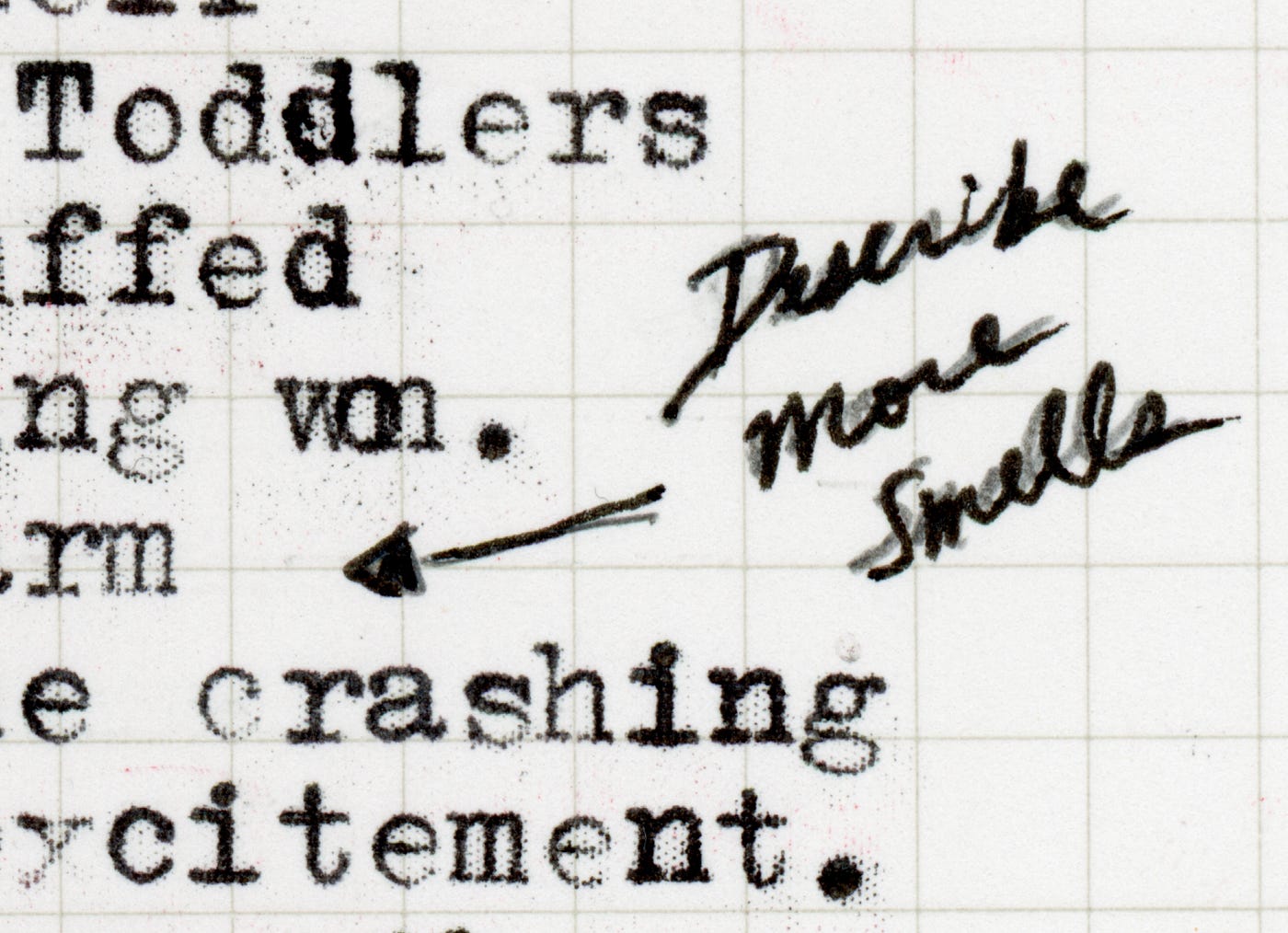
In the scan above we can see the small dots of ink from my typewriter and the original pencil I had written underneath the pen in a level of detail you can’t obtain with your eye.
Okay, so why write physically as opposed to your laptop? Were our english teachers right when they told us to print our drafts out and annotate them?
Yes, they were. Let me elaborate.
For those who don’t know, I have a minor in creative writing, and if I wasn’t a photographer, I was planning on being an author. I love to write!
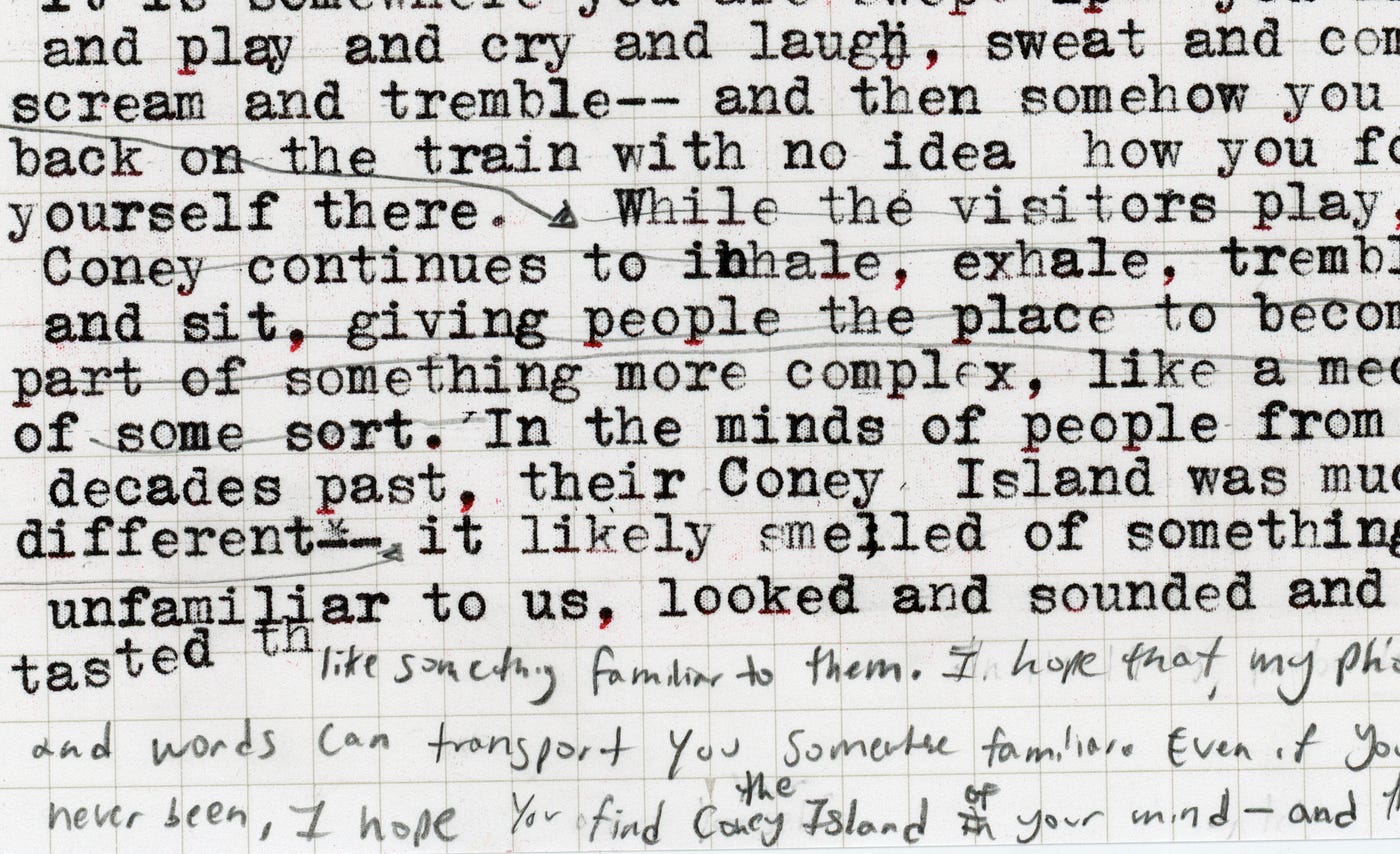
Like most people who write, whether for fun or necessity, I normally do so on a laptop. Unfortunately, as cliche as it may sound, I have found myself so much more inspired and successful on a typewriter. After leaving the structure of academia, I have not sat down and written something in a couple years. But when I started playing around on my typewriter, and experimenting with different papers of different opacities, weights, textures, I have found so much joy in the process and actually started sitting down to write again. Wow, I actually made it past the aesthetic and performative cliches and found myself enjoying and benefiting from the process. Who would have thought. Sometimes I’ll even write drafts digitally and then re write them on a type writer to see if something new comes. It often does.
Anyway. You probably already knew that creating something physically activates a different part of your brain than doing so digitally. It’s just nice to see that proven true.
I hope this newsletter inspired you to try documenting your artistic process. This is how you can differentiate yourself and perhaps find more meaning behind why you do what you do.
Until next time!
-Nat